
Dimensional change planning
Fabric Shrinkage and Dimensional Stability Control
State the complete care and measurement procedure so shrinkage results can guide pattern allowance, finishing and bulk-fabric release.
Published by Allot Tech. Project contact: founder Mr Kcal. Final engineering, performance, materials, compliance, manufacturing responsibility and commercial terms must be confirmed for the selected resource and signed project scope.
Updated October 7, 2026Direct answer
Shrinkage is a process result, not a fixed property of the fiber name.
A fabric dimensional-stability specification should state the method and edition, specimen size and location, conditioning, benchmark layout, laundering or dry-cleaning procedure, detergent, load, water and drying conditions, number of cycles, relaxation time, warp and weft calculation, reporting precision, acceptance limit and retest rule. Report growth as well as shrinkage and keep fabric-stage results separate from finished-garment results unless the buyer procedure explicitly connects them.
Project definition
Start with the complete decision basis.
Yarn structure, knitting or weaving tension, heat history, wet processing, relaxation, compaction, resin or mechanical finish and the selected care route all influence dimensional change. The buyer should approve the test route that matches the intended label claim and use the result in pattern, marker and garment-wash decisions. Bulk control then needs lot sampling and process records, not a single development sample.
Product and end use
Fiber, construction, weight, finish, garment type, intended care label and dimensional risk.
Test route
Standard, edition, wash or dry-clean procedure, detergent, load, temperature, agitation, extraction and drying.
Measurement
Conditioning, benchmark size, warp and weft direction, measurement timing, instruments and calculation precision.
Bulk control
Lot and roll sampling, cycle count, limits by direction, retest, retained samples and disposition.
System or development path
Connect development allowances with bulk finishing and release evidence.
Approve the care route
Select the exact buyer method and procedure that represents the intended product claim.
Sample and condition
Identify lot and roll, select representative areas, avoid distortion and condition before marking.
Mark and measure
Place stable benchmarks in both principal directions and record initial distances with the required precision.
Apply care cycles
Control machine, load, detergent, water, temperature, extraction, drying and number of cycles.
Recondition and calculate
Allow the specified relaxation, remeasure, calculate directional change and retain raw readings.
Control the process
Link misses to knitting or weaving, wet processing, heat setting, compaction, finish and approved rework.
Quotation comparison
Make the intended care label and product stage explicit.
| Decision area | Buyer should provide | Proposal should clarify |
|---|---|---|
| Procedure | Destination, buyer method and care claim. | Standard, edition, option, apparatus, detergent, drying and cycle count. |
| Product stage | Fabric or finished-product decision. | Pretreatment, garment construction, seam and trim effects, and excluded comparisons. |
| Directional limits | Pattern and performance need. | Warp or length and weft or width limits, growth treatment and rounding. |
| Sampling | Lot variability and process changes. | Roll locations, specimen count, colors, retest and escalation. |
| Corrective action | Failure mode and manufacturing history. | Relaxation, compaction, heat setting, finish adjustment, rework and verification. |
Solve the next project problem
Close these proposal gaps before price becomes the decision.
Use the brief below to turn a vague supplier conversation into questions that can be answered and documented.
Make this decision comparable.
Send: Destination, buyer method and care claim.
Require: Standard, edition, option, apparatus, detergent, drying and cycle count.
Make this decision comparable.
Send: Fabric or finished-product decision.
Require: Pretreatment, garment construction, seam and trim effects, and excluded comparisons.
Make this decision comparable.
Send: Pattern and performance need.
Require: Warp or length and weft or width limits, growth treatment and rounding.
Send the garment use, reference swatch or images, finished specification, color plan, quantity, destination and required date. The Allot Tech Project Desk can help organize the first comparison.
Decision evidence
Keep raw directional measurements and care conditions with every reported percentage.
Evidence should be identified before the order or approval stage so both sides know what will support the next decision.
Specimen identity
Record article, lot, roll, color, direction, location, dimensions and conditioning.
Care-cycle log
State procedure, equipment, load, detergent, water, temperature, drying and deviations.
Measurement sheet
Retain initial and final warp and weft distances, formula, sign convention and reported result.
Process genealogy
Link results to greige source, dye and finish route, heat setting, compaction and approved changes.
Report shrinkage and growth with a clear sign convention
A negative or positive symbol can be interpreted differently across reports. Define the formula and label each direction as shrinkage or growth in words.
- Keep initial and final readings
- Name each fabric direction
- State the formula and rounding
Do not mix fabric and garment results
Seams, trims, panels, garment finishing and wash loading can change the finished-product result. Use the product stage required by the buyer and keep both records when they serve different decisions.
- Identify the tested stage
- Connect pattern allowance to evidence
- Verify the finished product separately
Recheck after material or finishing changes
Changes to yarn, construction, dye route, heat setting, compaction, resin or softener may shift dimensional stability. Put these changes under approval and retesting control.
- Maintain a change register
- Use lot-based verification
- Check related hand and strength effects
Decision gates
Move forward when the next commitment has enough written evidence.
Project stages overlap, but each commercial commitment should have a visible basis, named approvers and a list of unresolved items.
Development basis approved
The garment use, signed physical reference, written specification, color and requested sample stage describe the same fabric direction.
Bulk standard released
The accepted sample, measurable tolerances, required tests, quantity, lot plan and approved changes are recorded before production.
Shipment evidence accepted
Roll and lot identity, shade grouping, inspection or test findings, packing and authorized disposition support release.
Before requesting a proposal
Build one brief that every resource can answer on the same basis.
This page is designed to help an international buyer prepare a clearer discussion, not to replace the responsible resource’s engineering or the buyer’s professional review.
Garment
End use, season, silhouette, market and construction priorities.
Reference
Physical swatch or garment, marked face, color and attributes to match.
Specification
Composition, finished weight, usable width, construction, finish and tolerances.
Development
Sample type, meters, colors, approval stages and decision dates.
Bulk plan
Quantity, inspection, testing, packing, destination and delivery window.
Allot Tech organized recurring buyer questions, project-scoping patterns, available catalog inputs and specialist-resource context into a decision sequence. No customer case, certification, output guarantee or factory ownership is implied unless separately verified for the named project.
Reference basis
Primary and specialist sources used to frame the buyer questions.
These sources support definitions and planning context. The current edition, local requirements and project-specific acceptance criteria still need confirmation by the responsible parties.
- AATCC TM135 – Dimensional Changes of Fabrics after Home Laundering
Official method record for dimensional change of fabrics under home-laundering procedures.
- Government of Canada – Determination of Dimensional Change in Textile Fabrics and Garments
Government publication illustrating controlled textile dimensional-change measurement.
Specialist textile context
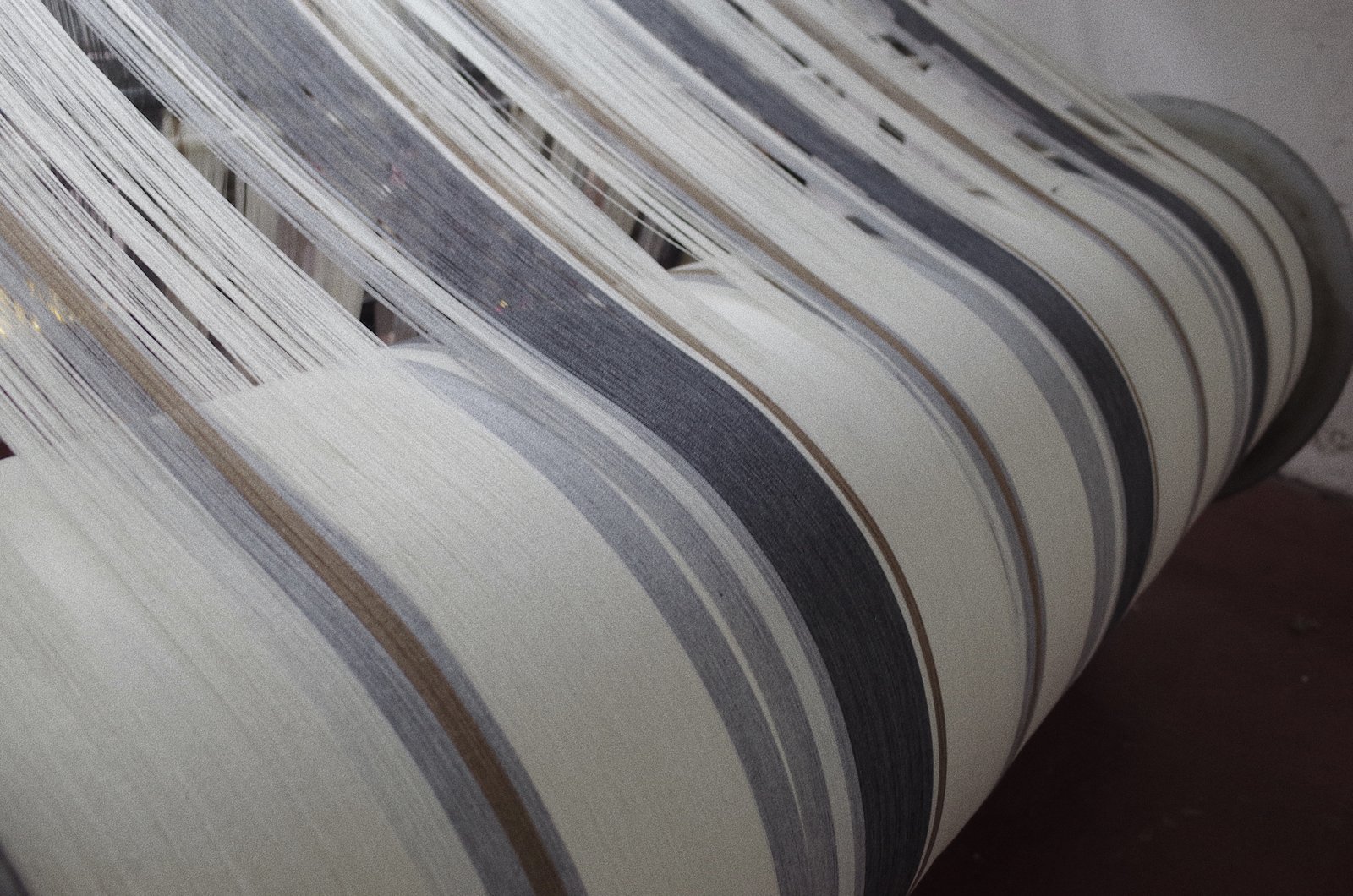
Connect fabric development with weaving and finishing.
These production images are from Fred Textile, the connected specialist textile resource represented across the Allot Tech textile program.
Buyer questions
Frequently asked questions
How is fabric shrinkage calculated?
Measure the same marked distance before and after the specified care and conditioning sequence, then calculate directional dimensional change using the named method and sign convention.
Should shrinkage be tested after one wash or several washes?
Use the cycle count required by the buyer method and intended care claim. State it explicitly because results from different cycle counts are not directly comparable.
Is fabric shrinkage the same as garment shrinkage?
No. Garment construction, seams, trims, finishing and loading can alter the result, so identify the tested product stage.
What records help investigate a shrinkage failure?
Keep raw measurements, specimens, care-cycle details, roll and lot identity, construction data, wet-processing route, heat setting and compaction records.
Project discussion
Review a Dimensional Stability Plan
Send the garment use, reference swatch or images, finished specification, color plan, quantity, destination and required date.