
Juice and tea systems
Juice & Tea Filling Lines from China
Connect beverage preparation, heat treatment, hygienic transfer, filling, cap treatment, cooling and packaging around the actual product and shelf-life requirement.
Published by Allot Tech. Project contact: founder Mr Kcal. Final engineering, performance, materials, compliance, manufacturing responsibility and commercial terms must be confirmed for the selected resource and signed project scope.
Updated October 7, 2026Direct answer
The product process must be defined before the filler can be selected.
Juice, tea, nectar and functional beverages differ in acidity, pulp or particle content, fill temperature, oxygen sensitivity, cleaning demand and packaging. A useful proposal should identify how ingredients are prepared, how the product is treated, which hygienic boundary is expected and how the bottle and closure behave through filling and cooling.
Source catalog models
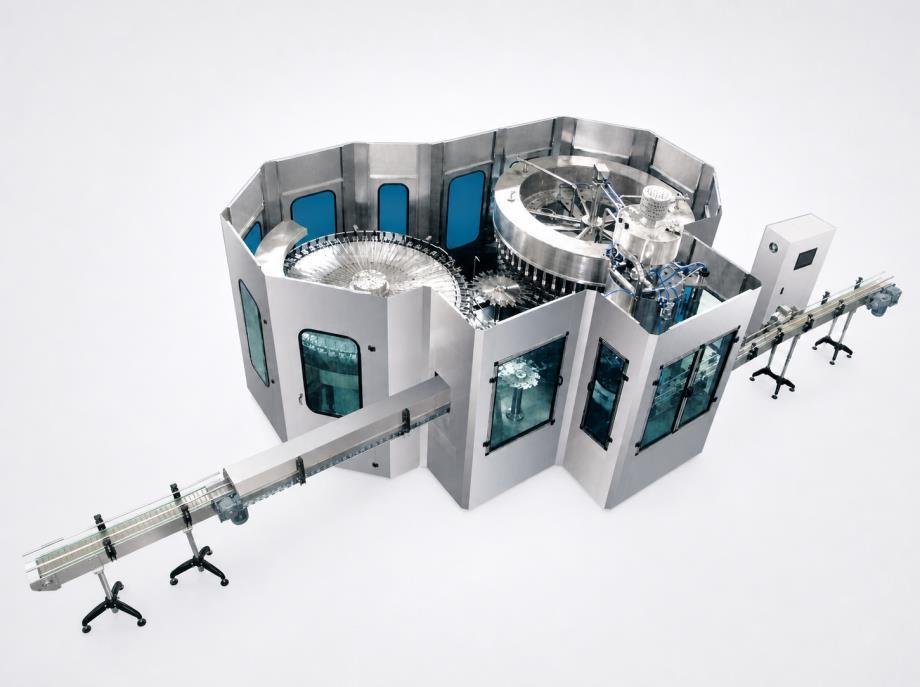
RXGF filling-machine models at a 500 ml reference size.
These four examples come from the eight-model table on page 14 of the Allot Tech 2026 catalog. The stated container range is 500–2,000 ml, height 170–320 mm and diameter 50–105 mm. Confirm the bottle drawing, neck finish, closure and change parts for every format.
| Reference model | Catalog BPH at 500 ml | Machine L × W × H (mm) | Weight (kg) | Listed power (kW) |
|---|---|---|---|---|
| RXGF14-12-5 | 4,000 | 2,360 × 1,770 × 2,700 | 2,800 | 2.42 |
| RXGF24-24-8 | 10,000 | 2,800 × 2,230 × 2,700 | 4,800 | 3.92 |
| RXGF50-50-12 | 20,000 | 5,900 × 4,123 × 2,700 | 8,600 | 8.42 |
| RXGF72-72-18 | 32,000 | 6,540 × 4,900 × 2,700 | 12,800 | 11.92 |
Keep the rating conditions in the quotation. Catalog BPH is a reference, not a guaranteed good-pack rate for every recipe or bottle. Machine dimensions exclude conveyors, service access and the full line layout; listed power excludes the total plant utility load.
A juice/tea application label does not establish an aseptic process, shelf life, permitted particle size or a validated thermal schedule. Have the responsible product specialist define the process first, then confirm filler temperature, contact materials, cleaning and package suitability.
Editable buyer checklist
Send the same equipment brief to every proposed resource.
Download an editable RFQ checklist for beverage, bottle and cap, output, process scope, site utilities, acceptance and commercial boundaries. The plain-text file opens in a text editor and can be copied into your own project documents.
Project definition
Start with the complete decision basis.
Juice, tea, nectar and functional beverages differ in acidity, pulp or particle content, fill temperature, oxygen sensitivity, cleaning demand and packaging. A useful proposal should identify how ingredients are prepared, how the product is treated, which hygienic boundary is expected and how the bottle and closure behave through filling and cooling.
Beverage
Recipe family, pH, Brix, pulp or particles, sensitivity, target shelf life and storage condition.
Process
Mixing, filtration, deaeration, homogenization, pasteurization or UHT, buffer, CIP and product recovery.
Package
PET or glass bottle, heat resistance, neck and cap, fill volume, label and pack format.
Operation
Target BPH, fill-temperature basis, format changes, factory utilities and destination requirements.
System or development path
Keep the product process and packaging line connected.
Ingredient preparation
Define water, syrup, concentrate, tea extraction, powder or minor-ingredient handling and batch control.
Blending and treatment
Clarify mixing, filtration, deaeration, homogenization and heat-treatment requirements.
Buffer and hygienic transfer
Size tanks and transfer routes around process continuity, cleaning, hold times and product protection.
Rinsing, filling, capping
Confirm hot-fill, ultra-clean or aseptic boundary, container compatibility, filling valves and closure treatment.
Cooling and drying
Plan bottle inversion where applicable, cooling profile, condensation control and bottle stability.
Labeling and packing
Match label adhesive or sleeve behavior, coding, inspection and final packaging to the cooled container.
Quotation comparison
Make process assumptions visible before comparing juice-line quotations.
| Decision area | Buyer should provide | Proposal should clarify |
|---|---|---|
| Product data | Recipe family, pH, Brix, viscosity, particles and shelf-life target. | Process route, heat treatment, filler type and stated design assumptions. |
| Hygiene level | Storage condition and packaging requirement. | Hot-fill, ultra-clean or aseptic boundary; CIP/SIP scope; environmental controls. |
| Container | PET or glass drawing, heat resistance, cap and label. | Bottle treatment, change parts, cooling behavior and sample-test requirement. |
| Cleaning | Products, allergens, changeover plan and cleaning media. | CIP circuits, return conditions, chemical dosing, verification and buyer interfaces. |
| Acceptance | Test product, packaging materials and quality checks. | FAT duration, temperatures, fill accuracy, closure checks and records. |
Quotation scope
Separate the juice process from the filling-machine price.
Two RXGF proposals can cover different process boundaries. Give each beverage and package its own operating conditions so the quoted equipment can be compared on a common basis.
| Scope decision | Buyer input | Ask the quotation to state |
|---|---|---|
| Product preparation | List the beverage types and relevant product properties; describe any pulp or particles. | State which blending, filtration, preparation and transfer steps are included and which require further product review. |
| Process and package | Provide the approved preservation route, filling conditions and bottle/closure specification when available. | Identify heating, holding, cooling and package treatment scope. Confirm who is responsible for process validation. |
| Multiple recipes | List planned recipes, allergens where relevant, batch sizes and format changes. | Describe cleaning circuits, changeover procedures, recovery or drain arrangements and the test basis. |
| Output and packing | State required output by recipe and bottle, plus the finished-pack format. | Quote guaranteed operating conditions, downstream equipment and acceptance tests separately from the catalog rating. |
Decision evidence
Keep project evidence connected to each approval and release decision.
Evidence should be identified before the order or approval stage so both sides know what will support the next decision.
Approved engineering basis
Keep the signed specification, equipment list, package files, layout and interface responsibilities under revision control.
Manufacturing progress record
Identify agreed drawings, component confirmations, photographs, open questions and approval decisions by date.
Test and acceptance record
State configuration, materials, operating conditions, measurements, results, punch-list items and release status.
Delivery and handover package
Connect packing, serial numbers, manuals, backups, spare parts, training and support contacts to the delivered scope.
Choose the process, not a buzzword
Hot filling, ultra-clean filling and aseptic filling are different project boundaries. The decision depends on product microbiology, packaging, shelf-life objective, utilities, operating discipline and investment plan; it cannot be made from a generic machine photo.
- Document the product basis
- Name the required hygienic boundary
- Confirm local food-safety responsibilities
Protect line continuity
Heating, holding, filling and cooling must operate as a connected system. Buffer strategy, recirculation, minimum flow, cleaning transitions and restart conditions should be discussed with the responsible process engineer.
- Map normal production and stops
- Define product-recovery assumptions
- Check cooling and packing bottlenecks
Test with approved materials
The final bottle, cap, label and representative product affect performance. Agree what will be available for FAT and which quality checks remain the buyer or qualified laboratory responsibility.
- Approve container samples
- Record fill temperature and closure checks
- Keep test limits in the signed agreement
Prepare your inquiry
Request a juice or tea line quotation
Send the juice or tea product brief, any particle information, bottle and cap drawings, approved process conditions, output by format and required equipment scope. Identify the process decisions still open.
The form carries this product reference into an editable inquiry. Add your requirements and contact details before sending.
Buyer questions
Frequently asked questions
What filling methods can be discussed for juice and tea?
Depending on the product and packaging, a project may involve hot filling, ultra-clean medium-temperature filling or aseptic filling. Final selection requires qualified process confirmation.
Why does the recipe matter for a machinery quotation?
Acidity, Brix, viscosity, particles, oxygen sensitivity and shelf-life goals influence preparation, heat treatment, valves, tanks, cleaning and packaging.
Can one line handle several bottle sizes?
Multiple formats may be possible, but each bottle, neck, cap, label and pack format needs a defined changeover scope and performance basis.
What should be tested during FAT?
Agree representative product or test liquid, bottles, caps, labels, operating time, temperatures, fill checks, closure checks, line output and evidence records.
Project discussion
Discuss a Juice or Tea Line
Send the beverage, package files, required output, factory conditions, destination and current project stage.