
Beverage process water
Water Treatment Systems for Bottling Plants
Use raw-water evidence and the required product-water specification to define treatment stages, flow, recovery, storage, sanitation and the connection to the filling line.
Published by Allot Tech. Project contact: founder Mr Kcal. Final engineering, performance, materials, compliance, manufacturing responsibility and commercial terms must be confirmed for the selected resource and signed project scope.
Updated September 3, 2026Direct answer
A generic RO list is not a water-treatment design.
Source water can contain suspended solids, hardness, iron, manganese, salts, organics or microbiological risks. The treatment train should be developed from a representative laboratory analysis, the product-water target, planned operating hours, local discharge limits and the needs of the beverage process. Qualified water and food-safety specialists should confirm the final design.
Project definition
Start with the complete decision basis.
Source water can contain suspended solids, hardness, iron, manganese, salts, organics or microbiological risks. The treatment train should be developed from a representative laboratory analysis, the product-water target, planned operating hours, local discharge limits and the needs of the beverage process. Qualified water and food-safety specialists should confirm the final design.
Raw water
Source type, seasonal laboratory report, available flow, pressure and temperature.
Water target
Product specification, process-water uses and applicable buyer-confirmed regulatory requirements.
Demand
Filler requirement, bottle rinsing, CIP, utilities, peak flow, operating hours and storage strategy.
Site
Power, chemical availability, drainage, concentrate disposal, room conditions and operator capability.
System or development path
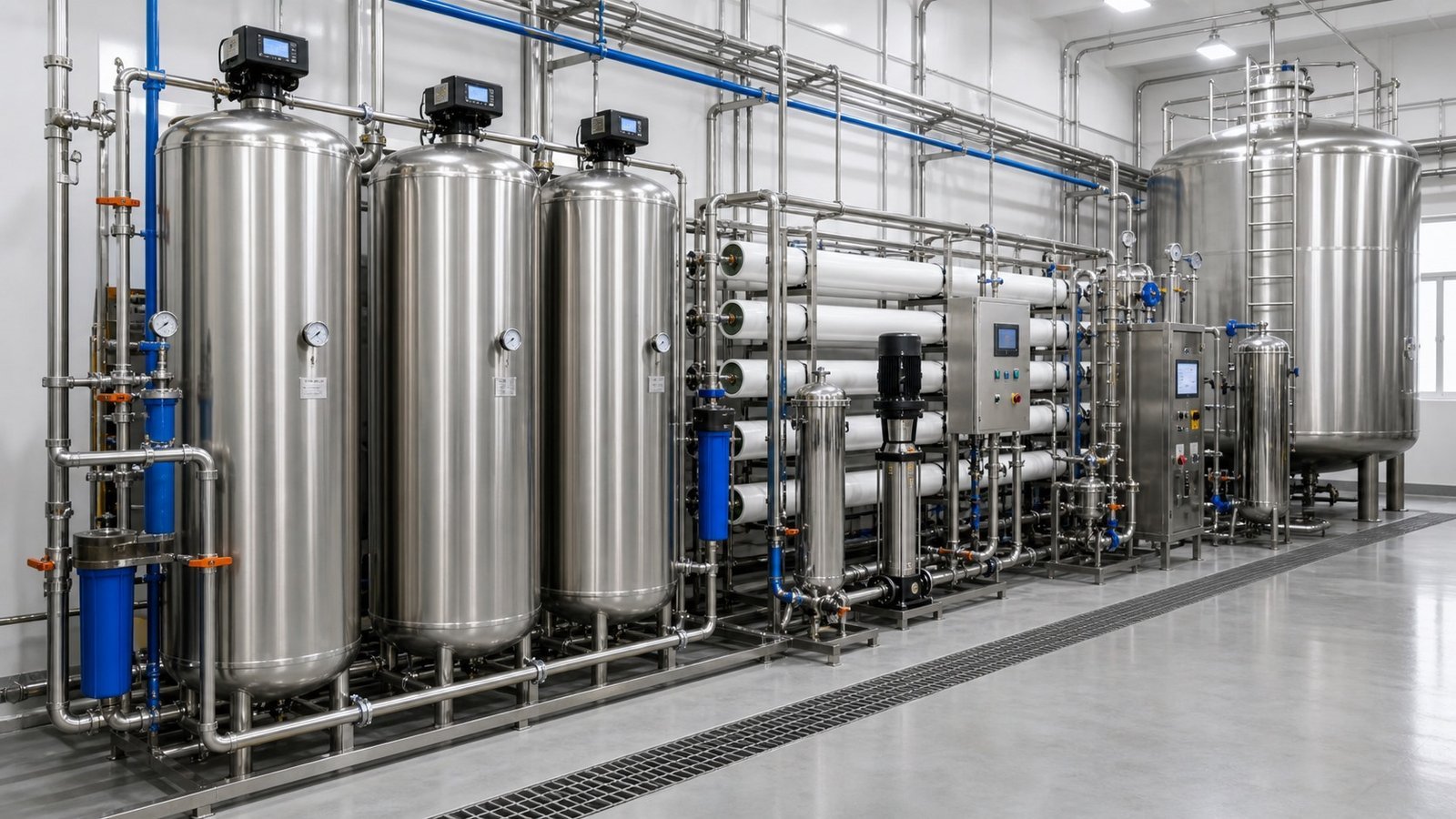
Design treatment stages around the actual water and demand profile.
Raw-water storage
Stabilize supply and identify pumping, level control and pre-treatment dosing needs.
Pretreatment
Use appropriate filtration, oxidation, coagulation or other steps according to confirmed contaminants.
Hardness and membrane protection
Address scaling, cartridge filtration, dosing and feed conditions before RO where RO is required.
RO or polishing
Define membrane stages, permeate target, recovery basis, instruments and cleaning provisions.
Disinfection and storage
Plan UV, ozone or other confirmed controls, hygienic tanks, recirculation and protected transfer.
Distribution and monitoring
Connect treated water to process users with sampling points, records, alarms and sanitation procedures.
Quotation comparison
Compare treatment proposals using one water analysis and one demand basis.
| Decision area | Buyer should provide | Proposal should clarify |
|---|---|---|
| Analysis | Representative raw-water report with units and test date. | Each treatment stage tied to a stated parameter or risk. |
| Flow | Average, peak and daily water demand by user. | Feed, permeate, reject and storage assumptions; operating hours and recovery. |
| Quality | Required product and process water limits. | Design target, monitoring points, instruments and responsibility for verification. |
| Operation | Local chemicals, staff, maintenance and membrane-cleaning capability. | Dosing, backwash, CIP, consumables, spares and operating records. |
| Discharge | Drainage and local concentrate or wash-water constraints. | Reject flow, backwash volume, neutralization or buyer-side disposal boundary. |
Solve the next project problem
Close these proposal gaps before price becomes the decision.
Use the brief below to turn a vague supplier conversation into questions that can be answered and documented.
Make this decision comparable.
Send: Representative raw-water report with units and test date.
Require: Each treatment stage tied to a stated parameter or risk.
Make this decision comparable.
Send: Average, peak and daily water demand by user.
Require: Feed, permeate, reject and storage assumptions; operating hours and recovery.
Make this decision comparable.
Send: Required product and process water limits.
Require: Design target, monitoring points, instruments and responsibility for verification.
Send the beverage, package files, required output, factory conditions, destination and current project stage. The Allot Tech Project Desk can help organize the first comparison.
Decision evidence
Keep project evidence connected to each approval and release decision.
Evidence should be identified before the order or approval stage so both sides know what will support the next decision.
Approved engineering basis
Keep the signed specification, equipment list, package files, layout and interface responsibilities under revision control.
Manufacturing progress record
Identify agreed drawings, component confirmations, photographs, open questions and approval decisions by date.
Test and acceptance record
State configuration, materials, operating conditions, measurements, results, punch-list items and release status.
Delivery and handover package
Connect packing, serial numbers, manuals, backups, spare parts, training and support contacts to the delivered scope.
Size the system beyond filler consumption
The plant also uses water for bottle rinsing, CIP, equipment cleaning, cooling and other services. A demand schedule should distinguish treated product water from utility water and include storage and peak-use logic.
- List every water user
- Separate average and peak demand
- Reserve cleaning and sanitation volume
Make recovery assumptions explicit
RO recovery varies with feed-water quality, temperature, membrane design and operating limits. Treat a quoted percentage as a design assumption that requires confirmation, not a universal result.
- Show feed, permeate and reject flows
- State temperature basis
- Plan membrane cleaning and consumables
Build a verification plan
Final water quality depends on equipment, operation, sanitation, sampling and laboratory methods. Define commissioning samples, routine monitoring and corrective actions with qualified local parties.
- Identify sampling points
- Name instruments and calibration needs
- Keep laboratory testing independent where required
Decision gates
Move forward when the next commitment has enough written evidence.
Project stages overlap, but each commercial commitment should have a visible basis, named approvers and a list of unresolved items.
Engineering basis approved
The product, package, output, equipment boundary, layout, utilities, responsibilities and open assumptions are controlled.
Manufacturing and test basis approved
Drawings, component schedule, test materials, acceptance conditions, documents and planned evidence are agreed.
Delivery and handover released
Punch-list closure, packing, shipment files, site readiness, installation scope, training and support ownership are visible.
Before requesting a proposal
Build one brief that every resource can answer on the same basis.
This page is designed to help an international buyer prepare a clearer discussion, not to replace the responsible resource’s engineering or the buyer’s professional review.
Product
Beverage, process, hygiene, shelf-life and operating conditions.
Package
Container, closure, label, code, finished pack and approved files.
Output
Required rate for a named format, shifts, annual plan and changeovers.
Factory
Measured space, utilities, access, drainage and local site constraints.
Project scope
Equipment boundary, documents, FAT, delivery, startup and destination.
Allot Tech organized recurring buyer questions, project-scoping patterns, available catalog inputs and specialist-resource context into a decision sequence. No customer case, certification, output guarantee or factory ownership is implied unless separately verified for the named project.
Manufacturing context
Use equipment views to ask more specific project questions.
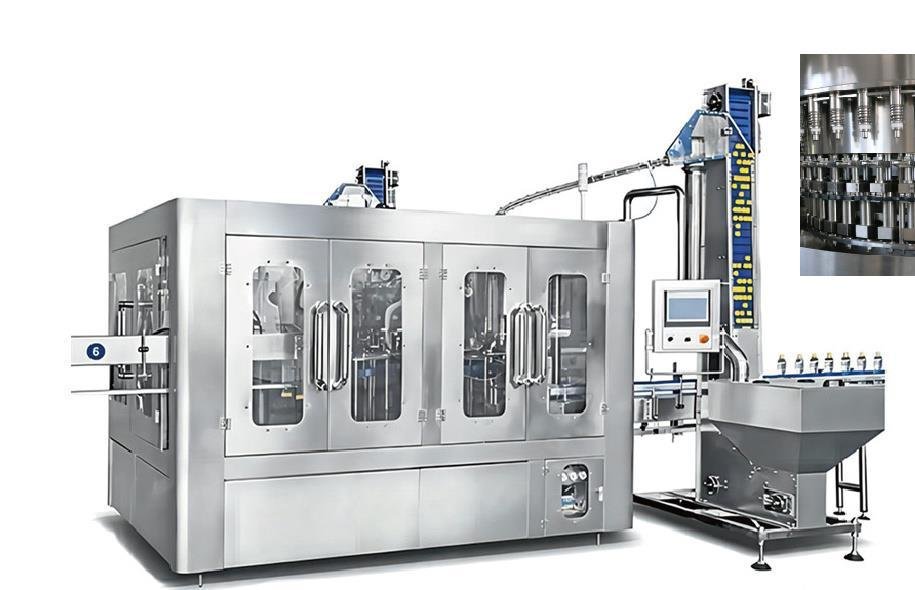
The process illustration supports scope discussion. The XGF equipment image is reproduced from page 9 of the Allot Tech 2026 catalog; use the catalog and project documents to review the applicable configuration.
Buyer questions
Frequently asked questions
Does every bottled water plant need reverse osmosis?
No. The treatment process depends on raw-water analysis and the required product-water specification. RO should be selected only when it addresses the confirmed treatment need.
How is water-treatment capacity selected?
Add product water, rinsing, CIP and other process demand, consider peak periods and storage, then define operating hours and recovery assumptions.
What raw-water information is needed?
Provide a representative laboratory report, source and seasonal context, available flow, temperature, pressure and any known variation.
Who confirms final drinking-water compliance?
The buyer should use qualified process, food-safety and local regulatory specialists. Equipment scope alone does not certify the finished product.
Project discussion
Discuss a Water Treatment System
Send the beverage, package files, required output, factory conditions, destination and current project stage.