
Allot Tech (Suzhou) Co., Ltd.
Cap feeding jams and missing caps: find the first interruption before replacing equipment
Separate a cap that never reaches the application point from one rejected, damaged or lost later.
Procurement guidance, not a machine setting or laboratory result
Solve the buying question in front of you
Map cap storage, orientation, elevation, transfer and the application point using the actual installed arrangement. Identify the first confirmed interruption, closure lot, format and operating event. Review feed availability separately from cap application, torque and final package acceptance. A larger hopper, faster feeder or changed capper setting is not automatically the remedy; the responsible specialist should approve a comparison on the named closure and equipment.
Define what missing cap means at a named point
A bottle without a cap at inspection does not prove that the feeder failed to supply one. Establish whether a closure was absent at pickup, incorrectly presented, rejected by an installed function, damaged during transfer or affected during application. Record the earliest confirmed observation and distinguish it from a hypothesis. Keep the bottle and closure samples that belong to the event, with an identified point on the line.
Use separate defect names for a feed gap, inverted cap, repeated blockage, damaged closure and uncapped finished bottle. Define the count and its denominator so several departments do not log the same package in different categories. The purpose is to turn an urgent request for a new feeder into a bounded investigation. An end-of-line photograph is valuable context but not a complete event history.
Trace the actual cap route and interfaces
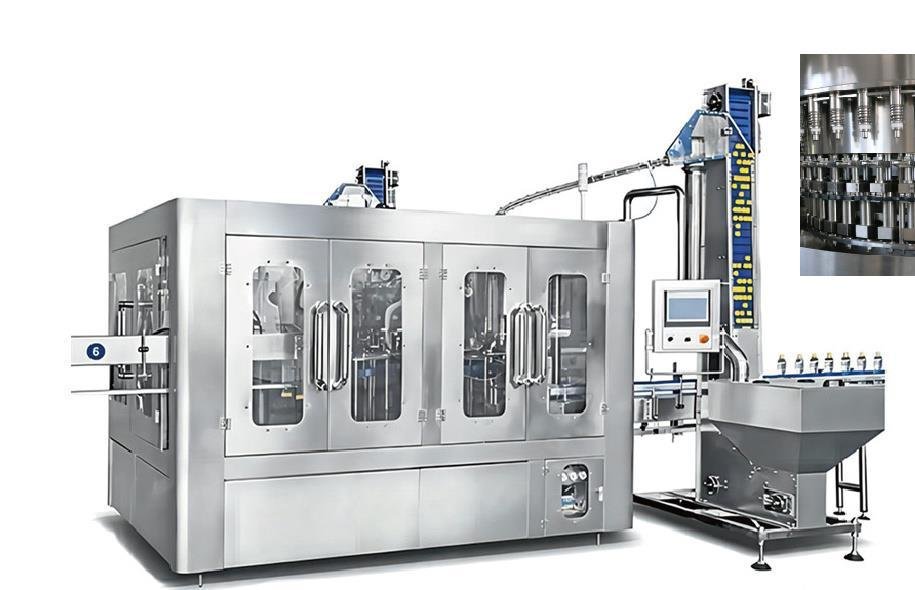
Draw the installed route from storage through the relevant sorting, lifting and transport functions to the application point. Name equipment and transfer boundaries; not every installation combines them in the same unit. Include the control and inspection functions actually supplied. A published example of an integrated feeder explains a possible architecture, not proof of the buyer's current configuration or an included Allot Tech feature.
Identify where the existing system can safely observe or record a shortage and how that information reaches the line controls. Do not assume every alarm is the initiating fault: some may be consequences of an earlier interruption. Use authorised records and observation positions. This guide does not instruct anyone to open a guarded chute, defeat an interlock or adjust a running feed mechanism.
Keep closure identity more precise than nominal diameter
Retain closure article, drawing revision, construction, supplier and lot, including the features relevant to its specified application. Record the package pair and the format currently installed. Two closures described by the same diameter need not be interchangeable in a feeding or application arrangement. A change in supplier or design should be disclosed even when the commercial product name remains unchanged.
Preserve unused samples from the affected lot and a confirmed prior reference where available. Keep material received condition separate from damage found after a jam. A recovered cap may have been altered by the event and cannot by itself establish its incoming condition. Ask the closure and equipment specialists which measurements or comparisons are appropriate; do not invent dimensional limits from a generic photograph.
Separate steady demand from interruptions and replenishment
Record stable production, hopper replenishment, planned stops, restart and format change as separate states. Include the event timeline, relevant alarms and operator actions. A short continuous demonstration may leave the complaint untested if it happens only when a container of caps is added or the line recovers from a pause. Agree representative operating cases before accepting the proposed scope.
Compare supply at the defined boundary with the demand of the actual production state. Do not treat a catalogue rate as measured availability at the capper. Keep good-pack output and interruption time in the same interval. Increasing nominal feed speed might move the issue elsewhere; the comparison must show what happens to the complete agreed boundary rather than a free-running feeder alone.
Review format parts and setup history before adjustment
Identify the released format reference, relevant parts and any recent maintenance or changeover using the equipment documentation. Ask the specialist to confirm which checks distinguish a local transfer issue from material variation or a common supply interruption. Record missing drawings or uncertain parts explicitly instead of guessing a compatible configuration for the RFQ.
Preserve the approved setup before a change and list the proposed intervention. Do not increase force, air or drive speed from this checklist. The appropriate settings belong to the actual equipment and closure combination. If several changes have already occurred without a record, keep that limitation visible; a reconstructed history should not be presented as a controlled baseline that was never measured.
Plan a comparison that can reject the proposed explanation
Agree materials, production states, time or quantity boundary, sample identity and outcome measures. Change one planned factor where practical and record unavoidable combined changes. Keep failed trials. Ask what observation would support the proposed cause and what result would require another review. This gives the buyer a basis for comparing service, parts, controls and replacement equipment.
Assess closure availability, good packages, reject disposition and the relevant final package checks separately. A reduction in visible chute jams does not prove correct closing or leakage performance. A successful feed trial may still require an application trial on the named bottle and cap. Keep those dependencies visible so a mechanical demonstration does not become an unqualified finished-package approval.
Specify inspection, rejection and commercial responsibility
Identify which faults an installed inspection can actually detect and where a rejected closure or package goes. Presence, orientation and other quality checks are different functions and should not be implied by one another. Controlled verification follows the equipment specialist's approved plan, with identified challenge samples and a defined disposition. No safety or quality control is bypassed to make a demonstration look successful.
Separate material review, existing-machine service, format parts, controls, inspection and new equipment in the offer. State who supplies closures, bottles, trial quantities, utilities, installation and acceptance. Allot Tech can coordinate confirmed commercial and technical information, but the actual quotation must confirm the equipment scope. Third-party product references do not establish ownership, certification or a universal feed guarantee.
Retain a recurrence record for the next lot
Close with the original event, closure and package revisions, approved change, comparison results and unresolved conditions. Define checks after lot or supplier substitution, maintenance and changeover. Keep the responsible specialist's operating instructions as the controlling procedure. A result dependent on undocumented manual intervention is incomplete as a handover and should be made explicit.
If the symptom returns, compare the same stage and operating state before assigning the previous cause. Do not silently widen the acceptable reject count or describe every future cap as covered. The useful outcome is a reproducible result for a named combination, with clear triggers for renewed review. That record makes the next service inquiry more precise than another isolated picture of uncapped bottles.
Evidence and decision matrix
| Observed event | Evidence to preserve | Decision to review |
|---|---|---|
| Gap before application | Timeline, source point and closure lot | Supply boundary or control response |
| Repeat blockage after a lot change | Unused and recovered samples separately | Material and format compatibility |
| Only at replenishment or restart | Operating state and operator actions | Representative recovery trial |
| Fewer jams, unchanged rejects | Same interval and final package records | Whether the problem moved downstream |
Worked review scenario
Hypothetical review: a feeder blamed for uncapped bottles
A buyer sees uncapped bottles after inspection and asks for a larger feeder. The team first identifies where caps cease to be available and keeps the closure lot, format and production event together. A comparison checks the relevant replenishment and restart cases as well as stable running. The quotation follows the confirmed boundary rather than assuming capacity is the cause. This is an illustrative investigation, not a customer result or a guaranteed improvement.
Prepare the request
Closure and package
Articles, drawings, revisions, supplier lots and actual retained samples.
Installed route
Storage, sorting, elevation, transfer, application and control boundaries.
Event record
First observation, production state, alarms, counts and approved setup.
Purchase decision
Service, parts, inspection or replacement; materials, trial and acceptance owners.
Technical reference and its limits
External technical references explain the context. They do not certify an Allot Tech machine or fabric, and their proprietary capabilities are not part of a quotation unless expressly confirmed.
Buyer questions
Does an uncapped bottle prove feeder failure?
No. Locate the first absence and separate feeding, presentation, rejection and application evidence.
Will a bigger hopper solve starvation?
Only a review of the actual interruption and demand can support that purchase.
Does the same cap diameter prove compatibility?
Use the actual closure design, revision and confirmed format rather than diameter alone.
Does smooth cap feeding prove package acceptance?
Closing, quantity and package integrity remain separate agreed requirements.
Discuss the project
Send the available documents and the decision that needs review.