
Fabric nonconformity evidence
Fabric Quality Claim Evidence
Preserve roll identity, condition, samples, measurements and contract references so a fabric nonconformity can be reviewed fairly and resolved through evidence.
Published by Allot Tech. Project contact: founder Mr Kcal. Final engineering, performance, materials, compliance, manufacturing responsibility and commercial terms must be confirmed for the selected resource and signed project scope.
Updated October 7, 2026Direct answer
A usable claim connects the observed problem to the contracted standard and affected material.
A fabric quality claim evidence file should identify the purchase order, article, color, dye lot, roll numbers, delivered quantity, affected quantity, receipt condition, approved standard and contract requirement. Quarantine the affected material without destroying traceability. Record where and how the issue was found, preserve representative and comparison samples, photograph scale and roll labels, map defects or shade groups, keep measurement and test methods, and document cutting or processing already performed. Notify the agreed contact within the contract process and request a joint review. Do not alter, relabel or dispose of disputed material until preservation and disposition are agreed.
Project definition
Start with the complete decision basis.
A photograph saying “bad fabric” rarely establishes scope, cause or remedy. The supplier needs to know which rolls are affected and how the observation differs from the approved standard. The buyer needs to protect production while separating pre-existing fabric nonconformity from transport, storage, spreading, cutting, washing or garment-processing effects. Evidence should support a technical review before commercial resolution.
Transaction identity
Purchase order, supplier, article, color, lot, roll IDs, packing list, receipt date and applicable order terms.
Observed condition
Defect description, discovery stage, location, frequency, affected quantity and production impact.
Comparison basis
Approved sample, written specification, shade standard, inspection method, test method and acceptance criterion.
Preservation
Quarantine status, roll labels, samples, photographs, measurements, storage condition, chain of custody and agreed disposition.
System or development path
Move from first observation to a controlled resolution file.
Contain
Stop affected material from being mixed, cut or relabeled while preserving roll and lot identity.
Notify
Use the agreed claim route and state the issue, affected material, immediate risk and evidence available.
Document
Record receipt condition, roll labels, defect location, images with scale, measurements and processing history.
Compare
Evaluate against the approved standard, written requirement and agreed inspection or test method.
Verify scope and cause
Use representative samples, joint review or qualified testing to distinguish affected quantity and possible origin.
Authorize disposition
Record reinspection, segregation, rework, return, allowance, replacement or other agreed resolution without inventing entitlement.
Quotation comparison
Build an evidence package that both parties can review.
| Decision area | Buyer should provide | Proposal should clarify |
|---|---|---|
| Identity and scope | Order, article, color, lot, roll IDs and affected quantity. | Traceable list matching labels, packing records, photographs and samples. |
| Requirement | Approved physical standard and exact contract or specification clause. | Named comparison basis, method, tolerance and revision. |
| Observation | Discovery stage, handling history, defect location and production impact. | Repeatable description, map, images, measurements and unaffected comparison. |
| Verification | Sampling plan, laboratory or inspector, custody and disputed-test process. | Results linked to the affected material and agreed method. |
| Disposition | Business urgency, usable material, containment and proposed next step. | Authorized technical and commercial resolution with dates and responsibilities. |
Buyer working matrix
Use this claim-file checklist before evidence is lost.
The contract governs notice and remedies. This checklist helps preserve technical facts; it does not decide liability or replace qualified legal and textile review.
| Evidence item | Capture now | Traceability key | Why it matters |
|---|---|---|---|
| Order and requirement | Purchase order, specification, approved changes and claim clause | Order/article/color/revision | Identifies the agreed basis instead of a later expectation |
| Packing and receipt | Packing list, roll count, marks, seal/condition and receipt date | Shipment and roll IDs | Separates delivery and quantity facts |
| Affected-material register | Roll number, lot, location, used/unused quantity and quarantine status | Roll and dye-lot identity | Defines scope and prevents mixing |
| Photographic record | Overall context, roll label, defect detail, scale, lighting and sequence | Image number linked to roll/map | Makes location and condition reviewable |
| Physical samples | Affected, boundary and unaffected comparison pieces as appropriate | Sealed sample ID and custody | Preserves surface, handfeel, shade and construction evidence |
| Measurements and tests | Method, instrument, conditioning, specimens, raw results and report | Sample/roll/method/lab identity | Allows repeatable comparison with the requirement |
| Processing history | Storage, relaxation, spreading, cutting, fusing, washing or finishing already performed | Date, machine/batch and operator record | Helps separate fabric condition from downstream effects |
| Communication and disposition | Notice, responses, joint findings, authorized action and retained evidence | Claim number and decision date | Creates one controlled resolution history |
Solve the next project problem
Close these proposal gaps before price becomes the decision.
Use the brief below to turn a vague supplier conversation into questions that can be answered and documented.
Make this decision comparable.
Send: Order, article, color, lot, roll IDs and affected quantity.
Require: Traceable list matching labels, packing records, photographs and samples.
Make this decision comparable.
Send: Approved physical standard and exact contract or specification clause.
Require: Named comparison basis, method, tolerance and revision.
Make this decision comparable.
Send: Discovery stage, handling history, defect location and production impact.
Require: Repeatable description, map, images, measurements and unaffected comparison.
Send the order and article identity, affected roll and lot list, approved standard, observed condition, available evidence and the review decision you need next. The Allot Tech Project Desk can help organize the first comparison.
Decision evidence
Keep project evidence connected to each approval and release decision.
Evidence should be identified before the order or approval stage so both sides know what will support the next decision.
Approved physical standard
Keep an identified swatch or garment reference with the approved face, color, surface and handfeel direction.
Finished specification
Record composition, weight, usable width, construction or article, finish, color and agreed tolerance basis.
Development and approval trail
Link submissions, comments, changes, test requirements and final approval status to the order.
Bulk follow-through record
Keep lot and roll identity, shade information, inspection findings, packing and release decisions traceable.
Preserve identity before investigating cause
Do not remove roll labels or mix affected and unaffected material. A cause investigation is much weaker when the dye lot, roll, packing and processing route can no longer be reconstructed.
- Quarantine without relabeling
- Record used and unused quantity
- Keep sample custody visible
Use the agreed method for disagreement
Visual defects, shade, weight, width, shrinkage, pilling and colorfastness are not verified in the same way. Cite the contract method and conditions, and agree how comparison testing will be handled if laboratories differ.
- Name the requirement and method
- Retain raw observations where possible
- Use qualified independent review when agreed
Separate technical finding from commercial remedy
First establish identity, requirement, observed condition, affected scope and likely cause. The contract and authorized commercial parties then determine reinspection, segregation, rework, replacement, allowance, return or another remedy.
- Avoid declaring liability from one photograph
- Document usable and affected quantities
- Record the final disposition and responsibilities
Decision gates
Move forward when the next commitment has enough written evidence.
Project stages overlap, but each commercial commitment should have a visible basis, named approvers and a list of unresolved items.
Development basis approved
The garment use, signed physical reference, written specification, color and requested sample stage describe the same fabric direction.
Bulk standard released
The accepted sample, measurable tolerances, required tests, quantity, lot plan and approved changes are recorded before production.
Shipment evidence accepted
Roll and lot identity, shade grouping, inspection or test findings, packing and authorized disposition support release.
Before requesting a proposal
Build one brief that every resource can answer on the same basis.
This page is designed to help an international buyer prepare a clearer discussion, not to replace the responsible resource’s engineering or the buyer’s professional review.
Garment
End use, season, silhouette, market and construction priorities.
Reference
Physical swatch or garment, marked face, color and attributes to match.
Specification
Composition, finished weight, usable width, construction, finish and tolerances.
Development
Sample type, meters, colors, approval stages and decision dates.
Bulk plan
Quantity, inspection, testing, packing, destination and delivery window.
Allot Tech organized recurring buyer questions, project-scoping patterns, available catalog inputs and specialist-resource context into a decision sequence. No customer case, certification, output guarantee or factory ownership is implied unless separately verified for the named project.
Reference basis
Primary and specialist sources used to frame the buyer questions.
These sources support definitions and planning context. The current edition, local requirements and project-specific acceptance criteria still need confirmation by the responsible parties.
- ASTM D5430-26 – Visually Inspecting and Grading Fabrics
Supports use of a consistently agreed visual grading method for commercial fabric acceptance and disagreement review.
- ISO 105-J03:2009 – Calculation of colour differences
Provides a method for calculating colour difference and setting an end-use-dependent tolerance when this method is contractually selected.
- AATCC TM8 – Colorfastness to Crocking
Illustrates why a claim must identify the exact test method and conditions rather than use a general colorfastness statement.
Specialist textile context
Connect fabric development with weaving and finishing.
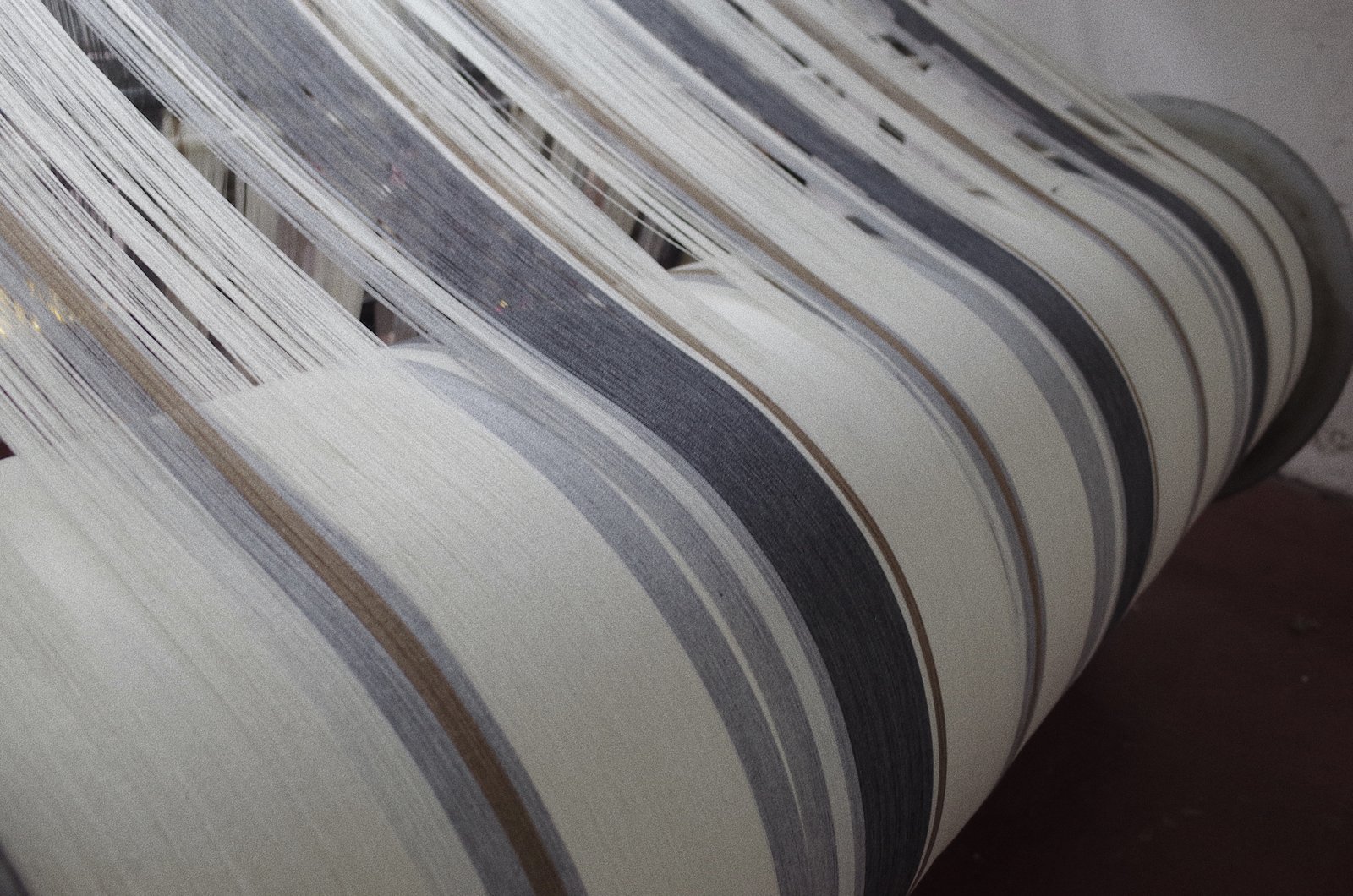
These production images are from Fred Textile, the connected specialist textile resource represented across the Allot Tech textile program.
Buyer questions
Frequently asked questions
What photographs are useful for a fabric claim?
Capture the full context, roll label, defect location, close detail, scale, lighting condition and comparison with the approved or unaffected material. Link every image to a roll or sample ID.
Should the buyer continue cutting disputed fabric?
Continuing may increase loss and make scope or cause harder to determine. Follow the agreed containment and notice process, quarantine affected material and obtain an authorized decision.
Is a laboratory report enough?
A report should still trace to the order, article, color, lot, roll or sample, method and acceptance criterion. It may not explain visual defect scope, handling history or commercial disposition by itself.
What if supplier and buyer test results differ?
Review method edition, sampling, conditioning, specimen identity, equipment and laboratory competence. Use the dispute or comparative-testing process agreed in the contract.
Project discussion
Organize a Fabric Quality Claim File
Send the order and article identity, affected roll and lot list, approved standard, observed condition, available evidence and the review decision you need next.