
Fabric quality & purchasing
Fabric Bow, Skew & Pattern Alignment
Check whether the finished fabric geometry supports the intended garment panels and pattern matching before approving a delivery by appearance alone.
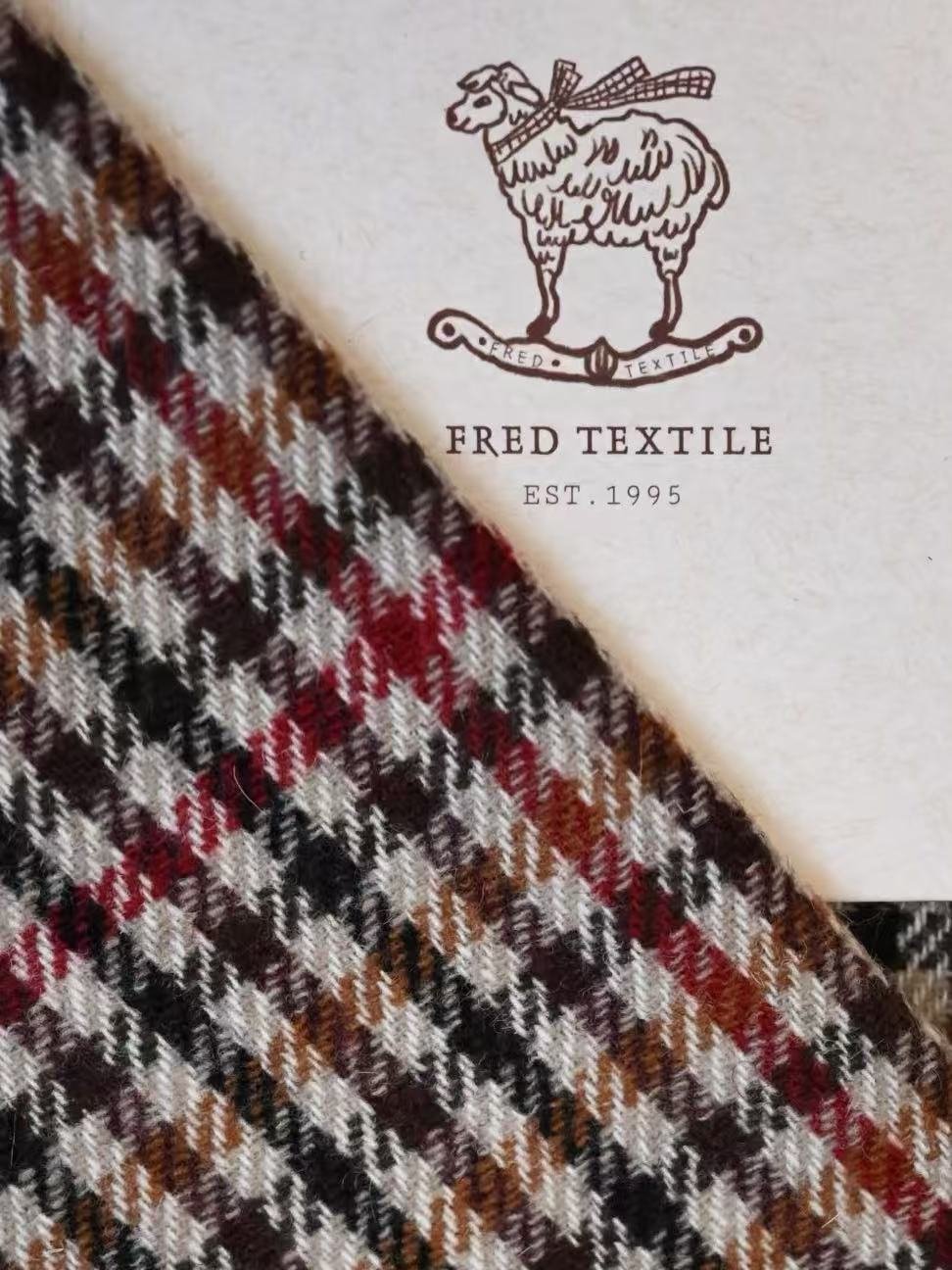
Published by Allot Tech. Project contact: founder Mr Kcal. Final engineering, performance, materials, compliance, manufacturing responsibility and commercial terms must be confirmed for the selected resource and signed project scope.
Updated September 14, 2026
Direct answer
Pattern scale and alignment need separate approval records.
Bow and skew describe departures from the intended alignment across the fabric width. Bow is a curved distortion; skew is an angled alignment relative to the reference direction. On checks, stripes and other directional fabrics, these effects can complicate cutting and matching. Inspect the finished material under the agreed method and record the position along each roll. The buyer and mill should define acceptance criteria for the garment and explain how yarn direction, printed pattern and visible motif are assessed when they do not coincide. Do not assume a universal limit suits every fabric or garment.
Project definition
Start with the complete decision basis.
Check whether the finished fabric geometry supports the intended garment panels and pattern matching before approving a delivery by appearance alone.
Design intention
Check, stripe, herringbone or other repeat; garment panels; matching points and permitted cutting direction.
Fabric state
Article, lot, finished condition, relaxation or conditioning requirement and usable width definition.
Measurement plan
Agreed method, reference line, locations across and along the roll, units and records.
Disposition rules
Buyer limits, repeat distortion treatment, garment trial, segregation and approval of any correction.
System or development path
Build a review sequence with named records and decision owners.
Agree the reference
Identify face, length direction, edges and whether the assessment follows yarns, a motif or both.
Inspect representative locations
Capture full-width observations and roll positions rather than one attractive swatch.
Check the garment effect
Review critical panels and matching requirements using the actual cutting plan.
Control any correction
Recheck the finished state, width, shade and approved properties after a proposed reprocessing step.
Quotation comparison
Agree the comparison basis before sampling or ordering.
| Decision area | Buyer should provide | Proposal should clarify |
|---|---|---|
| Geometry | Defined yarn and pattern references. | Bow and skew observations kept separately. |
| Sampling | Lot and roll coverage with named positions. | Evidence of variation along the roll. |
| Cutting use | Marker direction and matching requirements. | Garment or cutting trial where required. |
| Release | Limits and corrective-action route. | Traceable segregation or approval decision. |
Buyer working matrix
Pattern scale and alignment need separate approval records.
This matrix complements the selected measurement method and the garment specification.
| Attribute | Record | Why separate it |
|---|---|---|
| Repeat | Length and width dimensions | A correct scale can still be distorted |
| Bow | Curvature and roll position | Shows curved alignment variation |
| Skew | Angle-related displacement and position | Shows directional alignment variation |
| Cutting effect | Panel trial and matching result | Connects geometry to garment use |
Solve the next project problem
Close these proposal gaps before price becomes the decision.
Use the brief below to turn a vague supplier conversation into questions that can be answered and documented.
Make this decision comparable.
Send: Defined yarn and pattern references.
Require: Bow and skew observations kept separately.
Make this decision comparable.
Send: Lot and roll coverage with named positions.
Require: Evidence of variation along the roll.
Make this decision comparable.
Send: Marker direction and matching requirements.
Require: Garment or cutting trial where required.
Send the garment use, reference swatch or images, finished specification, color plan, quantity, destination and required date. The Allot Tech Project Desk can help organize the first comparison.
Decision evidence
Keep project evidence connected to each approval and release decision.
Evidence should be identified before the order or approval stage so both sides know what will support the next decision.
Approved physical standard
Keep an identified swatch or garment reference with the approved face, color, surface and handfeel direction.
Finished specification
Record composition, weight, usable width, construction or article, finish, color and agreed tolerance basis.
Development and approval trail
Link submissions, comments, changes, test requirements and final approval status to the order.
Bulk follow-through record
Keep lot and roll identity, shade information, inspection findings, packing and release decisions traceable.
A small swatch can hide a full-width problem
A swatch may show color and surface well but not the alignment across the usable width. Request full-width evidence and record where it came from. For a repeated pattern, include a scale and a straight reference so the reviewer can understand the image; an angled phone photograph is supporting context, not a substitute for measurement.
- Label the roll and distance
- Include a scale and reference
- Keep distortion evidence separate from color approval
Measure pattern repeat and geometry as different attributes
A check can have the intended repeat size yet be misaligned across the roll. Conversely, a straight pattern may still have an incorrect scale. Record repeat dimensions, bow and skew as separate checks. If a printed motif differs from the woven yarn direction, ask the garment team which features drive appearance and cutting decisions.
- Measure length and width repeat
- Name the alignment reference
- Review visible seams and matching points
Reprocessing needs renewed approval
A proposed finishing correction may change other attributes of the fabric. Agree what will be rechecked before work begins, including usable width, weight, handfeel, dimensional behavior and shade where relevant. Keep corrected material segregated until the buyer has reviewed the new evidence, and retain the previous record to explain why the lot was reworked.
- Record the proposed process change
- Retest the agreed affected attributes
- Release the corrected lot explicitly
Decision gates
Move forward when the next commitment has enough written evidence.
Project stages overlap, but each commercial commitment should have a visible basis, named approvers and a list of unresolved items.
Development basis approved
The garment use, signed physical reference, written specification, color and requested sample stage describe the same fabric direction.
Bulk standard released
The accepted sample, measurable tolerances, required tests, quantity, lot plan and approved changes are recorded before production.
Shipment evidence accepted
Roll and lot identity, shade grouping, inspection or test findings, packing and authorized disposition support release.
Before requesting a proposal
Build one brief that every resource can answer on the same basis.
This page is designed to help an international buyer prepare a clearer discussion, not to replace the responsible resource’s engineering or the buyer’s professional review.
Garment
End use, season, silhouette, market and construction priorities.
Reference
Physical swatch or garment, marked face, color and attributes to match.
Specification
Composition, finished weight, usable width, construction, finish and tolerances.
Development
Sample type, meters, colors, approval stages and decision dates.
Bulk plan
Quantity, inspection, testing, packing, destination and delivery window.
Allot Tech organized recurring buyer questions, project-scoping patterns, available catalog inputs and specialist-resource context into a decision sequence. No customer case, certification, output guarantee or factory ownership is implied unless separately verified for the named project.
Reference basis
Primary and specialist sources used to frame the buyer questions.
These sources support definitions and planning context. The current edition, local requirements and project-specific acceptance criteria still need confirmation by the responsible parties.
- ASTM D3882
Official standard page for bow and skew testing in woven and knitted fabrics. Confirm the edition and full procedure with the testing party.
Specialist textile context
Connect fabric development with weaving and finishing.
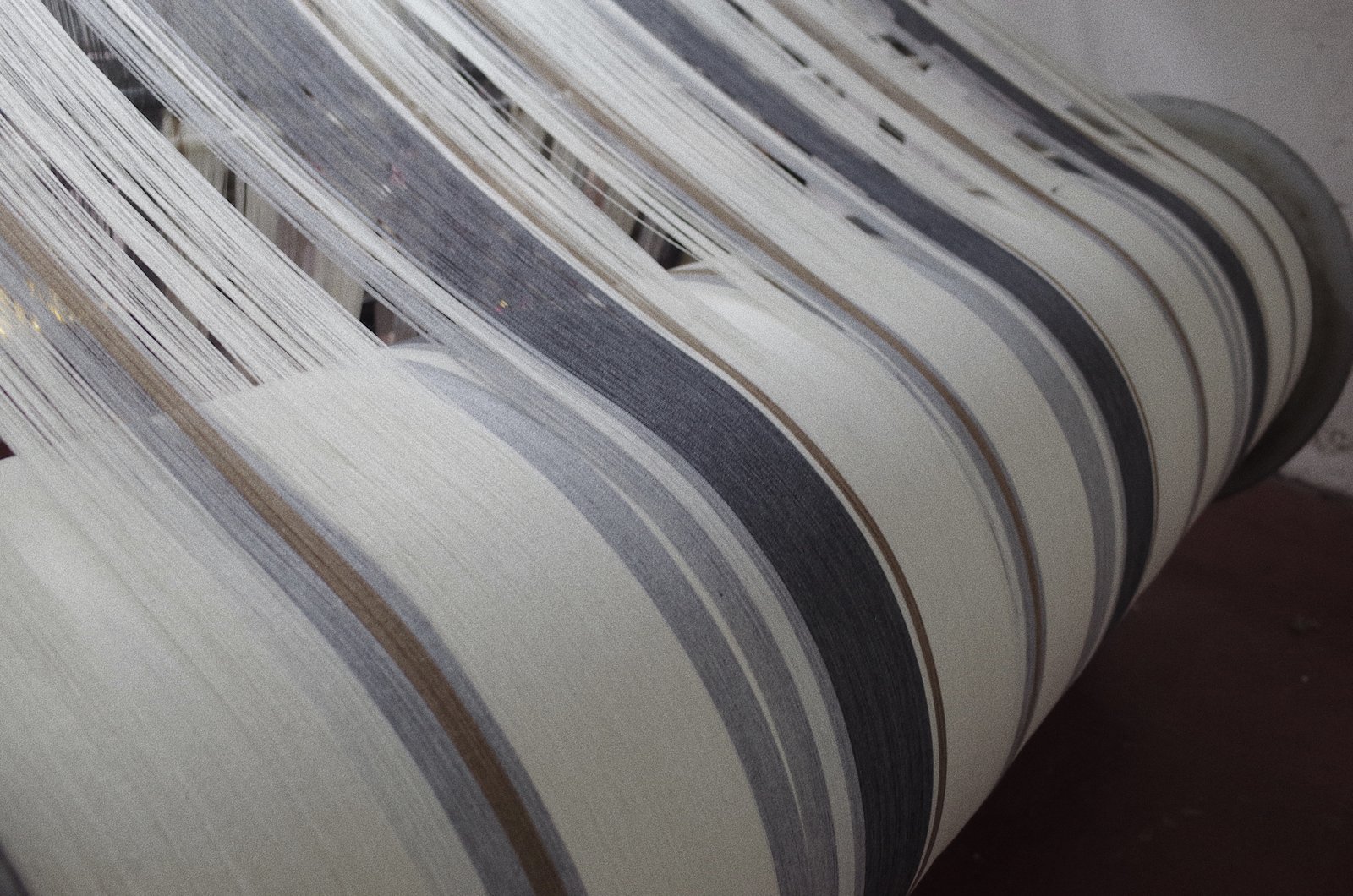
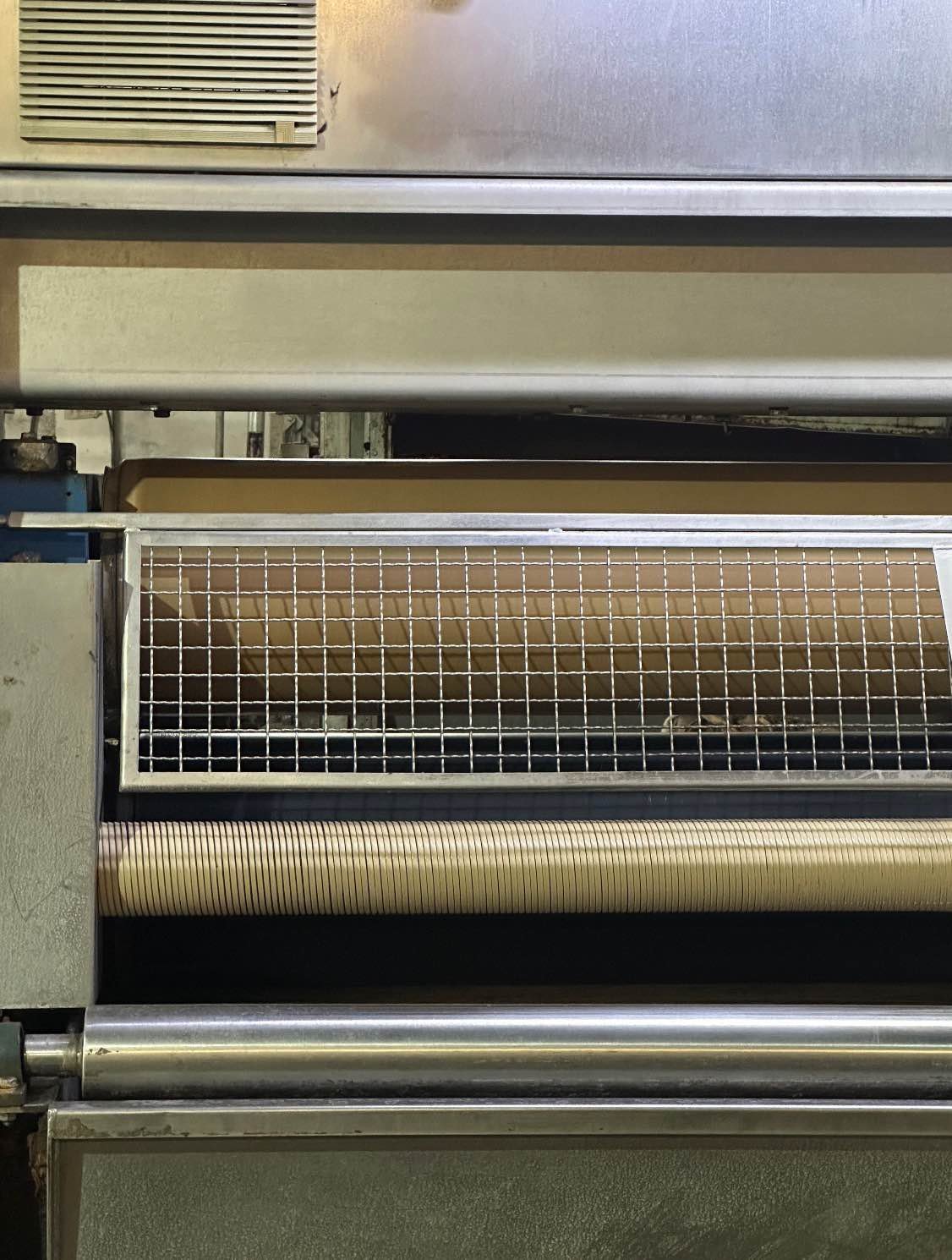
These production images are from Fred Textile, the connected specialist textile resource represented across the Allot Tech textile program.
Buyer questions
Frequently asked questions
Are bow and skew the same defect?
No. Bow refers to a curved departure across the width; skew refers to an angled alignment. Record them separately under the agreed method.
Can lab-dip approval cover pattern alignment?
No. Color approval does not establish the geometry of finished bulk fabric. Use separate pattern and roll-level controls.
Does four-point inspection replace bow and skew testing?
Not automatically. A defect scoring procedure and a geometry measurement answer different questions. Specify both where the garment requires them.
Project discussion
Discuss This Fabric Program
Send the garment use, reference swatch or images, finished specification, color plan, quantity, destination and required date.