
Project risk control
Bottling Project Risk Register
Turn project uncertainty into named risks, warning triggers, responsible owners, required evidence and dated decisions before problems reach the factory floor.
Published by Allot Tech. Project contact: founder Mr Kcal. Final engineering, performance, materials, compliance, manufacturing responsibility and commercial terms must be confirmed for the selected resource and signed project scope.
Updated September 3, 2026Direct answer
A risk register is useful only when it changes a decision or assigns an action.
A bottling project risk register is a controlled list of uncertain events or conditions that could affect scope, quality, schedule, cost, safety, compliance or startup. Each entry should name the cause, possible effect, early warning trigger, current controls, action owner, due date, evidence and escalation decision. Build it from the approved requirement, responsibility matrix, layout, utility schedule, project plan and acceptance basis. Review it at RFQ clarification, order release, design approval, FAT readiness, shipment release and site-readiness gates. Do not hide open assumptions inside a generic traffic-light score.
Project definition
Start with the complete decision basis.
Beverage projects cross product processing, containers, controls, utilities, buildings, logistics and local responsibilities. A supplier may control the machine but not the raw water, bottle design, site power, permits or downstream materials. The register gives the buying team one place to see where an interface can fail and what evidence is needed before the next commitment.
Project basis
Approved requirement, product and package matrix, equipment scope, performance conditions and destination.
Interfaces
Responsibility matrix, utility points, building work, supplied materials, controls, local compliance and third parties.
Milestones
Design approvals, long-lead decisions, FAT readiness, shipment release, site readiness and startup dependencies.
Governance
Risk owner, action owner, review cadence, escalation threshold, evidence location and authority to accept residual risk.
System or development path
Keep risk review connected to each project commitment.
Identify
Describe the uncertain cause and affected project objective without writing a vague problem statement.
Analyze
Assess likelihood and consequence using the buyer organization's defined method and available evidence.
Assign
Name one accountable owner and the parties responsible for mitigation actions or information.
Treat
Choose avoidance, reduction, transfer or informed acceptance and define the required action.
Monitor
Record warning triggers, due dates, status, new evidence and whether exposure is changing.
Close or escalate
Close with evidence, carry forward with explicit residual risk or stop the decision gate.
Quotation comparison
Make project risks specific enough to manage.
| Decision area | Buyer should provide | Proposal should clarify |
|---|---|---|
| Risk statement | Cause, uncertain event and potential effect. | A specific statement tied to scope, quality, cost, schedule, safety or startup. |
| Ownership | Decision authority and involved project parties. | Accountable owner, action owner, due date and escalation route. |
| Trigger | Observable warning condition or missed prerequisite. | How the team will know action is required before the impact occurs. |
| Treatment | Available avoidance, reduction, transfer or acceptance choices. | Action, resources, dependencies and evidence required to reduce exposure. |
| Gate decision | Current evidence and buyer tolerance. | Close, accept, escalate or prevent the next commitment until the condition is resolved. |
Buyer working matrix
Start the risk register with project-specific interface risks.
The examples below are prompts, not claims about a particular supplier. Replace them with the actual project cause, owner, evidence and decision.
| Risk area | Early trigger | Owner to name | Evidence before commitment |
|---|---|---|---|
| Product or package basis changes | New recipe, bottle, cap, label or pack after design freeze | Buyer product owner plus responsible technical party | Approved files, change assessment and revised performance basis |
| Scope gap between machines | Interfaces absent from equipment list or responsibility matrix | Project manager | Controlled equipment list, interface matrix and supplier clarification |
| Utility capacity mismatch | Demand schedule exceeds measured or designed site capacity | Buyer site engineer | Load data, measured conditions, diversity basis and approved utility plan |
| Layout or access conflict | Unverified dimensions, columns, doors, drains or maintenance zones | Buyer site owner with layout coordinator | Current survey, controlled GA/layout and access review |
| FAT evidence incomplete | Test materials, procedures, instruments or acceptance limits are not approved | Acceptance owner | FAT plan, readiness checklist, calibrated instruments and approved criteria |
| Shipment before punch-list control | Open items lack owners, dates or site disposition | Commercial project owner | Signed punch list, release decision and shipment/handover plan |
| Site not ready for specialists | Power, air, water, drainage, access or local labor remain unverified | Buyer site manager | Dated readiness evidence, video walkdown and open-item closure |
| Handover dependency | Manuals, backups, spares, training or support route are undefined | Operations owner | Handover index, serial records, backups, spares and responsibility sign-off |
Solve the next project problem
Close these proposal gaps before price becomes the decision.
Use the brief below to turn a vague supplier conversation into questions that can be answered and documented.
Make this decision comparable.
Send: Cause, uncertain event and potential effect.
Require: A specific statement tied to scope, quality, cost, schedule, safety or startup.
Make this decision comparable.
Send: Decision authority and involved project parties.
Require: Accountable owner, action owner, due date and escalation route.
Make this decision comparable.
Send: Observable warning condition or missed prerequisite.
Require: How the team will know action is required before the impact occurs.
Send the current equipment scope, layout, utility schedule, milestone plan, open assumptions and the decision gate that is approaching. The Allot Tech Project Desk can help organize the first comparison.
Decision evidence
Keep project evidence connected to each approval and release decision.
Evidence should be identified before the order or approval stage so both sides know what will support the next decision.
Approved engineering basis
Keep the signed specification, equipment list, package files, layout and interface responsibilities under revision control.
Manufacturing progress record
Identify agreed drawings, component confirmations, photographs, open questions and approval decisions by date.
Test and acceptance record
State configuration, materials, operating conditions, measurements, results, punch-list items and release status.
Delivery and handover package
Connect packing, serial numbers, manuals, backups, spare parts, training and support contacts to the delivered scope.
Write causes and consequences separately
“Late startup” is an effect, not a complete risk. State what could cause it, where the warning will appear and which milestone is threatened. This makes mitigation possible and prevents several unrelated issues from being hidden in one row.
- Name the uncertain cause
- Describe the affected objective
- Define an observable trigger
Use evidence to move the rating
A color should not change because a meeting felt reassuring. Change status when a drawing is approved, a load is measured, a test is passed, a responsibility is signed or another defined control is completed.
- Link evidence by revision
- Keep action dates and owners visible
- Record why residual risk is accepted
Review risk at project gates
The register should follow the project, not live in a forgotten spreadsheet. Review the relevant entries before order release, design freeze, FAT, shipment and specialist travel. New risks can be added without rewriting closed history.
- Filter by the next decision gate
- Escalate overdue high-consequence actions
- Archive closure evidence with the handover package
Decision gates
Move forward when the next commitment has enough written evidence.
Project stages overlap, but each commercial commitment should have a visible basis, named approvers and a list of unresolved items.
Engineering basis approved
The product, package, output, equipment boundary, layout, utilities, responsibilities and open assumptions are controlled.
Manufacturing and test basis approved
Drawings, component schedule, test materials, acceptance conditions, documents and planned evidence are agreed.
Delivery and handover released
Punch-list closure, packing, shipment files, site readiness, installation scope, training and support ownership are visible.
Before requesting a proposal
Build one brief that every resource can answer on the same basis.
This page is designed to help an international buyer prepare a clearer discussion, not to replace the responsible resource’s engineering or the buyer’s professional review.
Product
Beverage, process, hygiene, shelf-life and operating conditions.
Package
Container, closure, label, code, finished pack and approved files.
Output
Required rate for a named format, shifts, annual plan and changeovers.
Factory
Measured space, utilities, access, drainage and local site constraints.
Project scope
Equipment boundary, documents, FAT, delivery, startup and destination.
Allot Tech organized recurring buyer questions, project-scoping patterns, available catalog inputs and specialist-resource context into a decision sequence. No customer case, certification, output guarantee or factory ownership is implied unless separately verified for the named project.
Reference basis
Primary and specialist sources used to frame the buyer questions.
These sources support definitions and planning context. The current edition, local requirements and project-specific acceptance criteria still need confirmation by the responsible parties.
- ISO 31000:2018 – Risk management guidelines
Provides principles for identifying, analyzing, evaluating, treating, monitoring and communicating risk.
- ISA-105 series – Acceptance testing and commissioning framework
Supports readiness checks, punch-list tracking, defined completion criteria and clear roles across FAT and SAT.
Manufacturing context
Use equipment views to ask more specific project questions.
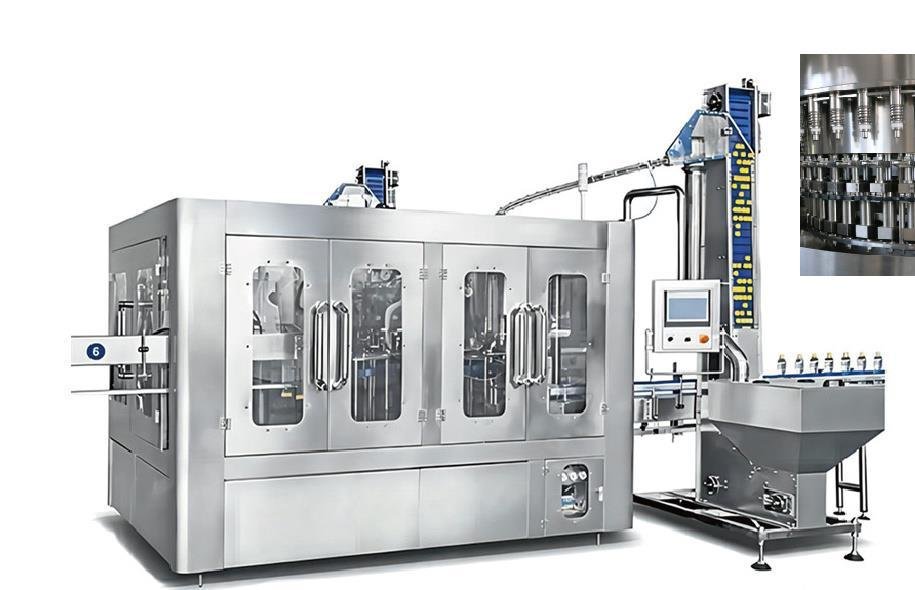
The process illustration supports scope discussion. The XGF equipment image is reproduced from page 9 of the Allot Tech 2026 catalog; use the catalog and project documents to review the applicable configuration.

Buyer questions
Frequently asked questions
Who should own a bottling project risk register?
The buyer should name an accountable project owner. Suppliers and contractors provide actions and evidence for the risks within their scope, but buyer-side site, product and business risks cannot be delegated invisibly.
Is a risk register the same as a punch list?
No. A punch list records identified nonconformities or incomplete items. A risk register also covers uncertain future events, causes, triggers and planned treatments before an issue occurs.
When should the register be reviewed?
At a defined cadence and before major commitments such as order release, design freeze, FAT, shipment, site mobilization and acceptance. Review frequency should increase when exposure or change activity increases.
Should probability and impact use numbers?
Use the method defined by the buyer organization. Qualitative scales can work when their meaning is clear. False numerical precision should not replace evidence, ownership and action.
Project discussion
Review a Bottling Project Risk Register
Send the current equipment scope, layout, utility schedule, milestone plan, open assumptions and the decision gate that is approaching.