
Engineering document control
Bottling Line Technical Document Review
Organize drawings, schedules, specifications, approvals and handover files so each project decision uses the current technical basis.
Published by Allot Tech. Project contact: founder Mr Kcal. Final engineering, performance, materials, compliance, manufacturing responsibility and commercial terms must be confirmed for the selected resource and signed project scope.
Updated September 3, 2026Direct answer
A document is valuable when its revision, purpose, interfaces and approval status are visible.
A bottling line technical document review should connect every deliverable to the decision it supports. Start with a document register that names the required file, responsible author, planned issue date, current revision, review status and final handover format. Review the process flow and equipment list first, then layout and utilities, controls and safety interfaces, manufacturing approvals, FAT documents, packing records, manuals, software backups, spare-parts data and training files. Comments should cite the document and revision, identify the affected requirement, name an owner and state whether the issue blocks approval or can remain open under a controlled action.
Project definition
Start with the complete decision basis.
Projects become difficult to control when a PDF in one email, a layout in another and a quotation revision in a third describe different scopes. A document register and review gate do not create more paperwork for its own sake. They establish which technical basis the buyer and supplier are actually using for design, manufacturing, testing, installation and future support.
Document register
Required deliverables, owner, format, planned date, current revision, language, status and final handover requirement.
Requirement trace
Contract item, technical specification, approved package file, local requirement or open assumption supported by each document.
Review workflow
Reviewer, comment format, response owner, approval authority, due date and rule for superseded revisions.
Handover use
Files needed by installation, operations, maintenance, quality, IT/controls and spare-parts teams after delivery.
System or development path
Review documents in the order that project decisions depend on them.
Scope basis
Confirm the product, package matrix, process flow, equipment list and responsibility boundaries agree.
Arrangement and interfaces
Review layout, access, foundations, elevations, drainage, utility points and maintenance zones.
Process and utility detail
Check flow direction, tanks, pumps, piping, instruments, cleaning paths, loads and design conditions.
Controls and safety
Identify architecture, interfaces, signals, recipes, alarms, access, backups and responsible safety review.
Acceptance package
Approve FAT procedure, configuration, materials, instruments, records, deviations and punch-list control.
Handover package
Index final as-built files, manuals, serial data, backups, spares, training and support contacts.
Quotation comparison
Tie every document review to a project decision.
| Decision area | Buyer should provide | Proposal should clarify |
|---|---|---|
| Document identity | Required file name, purpose, responsible party and planned gate. | Document number, title, revision, date, status and change summary. |
| Technical basis | Approved products, packages, process, output and site conditions. | Assumptions and references that match the current signed scope. |
| Interface review | Buyer systems, local work and third-party boundaries. | Connection points, loads, signals, dimensions, responsibilities and unresolved conflicts. |
| Comment closure | Reviewer comments with requirement references and priority. | Response, revised file, owner, due date and explicit disposition. |
| Final handover | Format, language, editable/native files and recipient needs. | As-built index, backups, serial information, manuals, spares and retained acceptance records. |
Buyer working matrix
Use a gate-based document register instead of one undifferentiated file list.
The exact deliverables depend on the contracted scope. This matrix helps the buyer ask which document is needed, who reviews it and what decision it unlocks.
| Deliverable group | Key review question | Control field | Approval or use gate |
|---|---|---|---|
| Equipment list and process flow | Do all machines, tanks, conveyors, utilities and buyer-supplied items match the agreed boundary? | Document number, revision and linked proposal | Scope freeze and order release |
| Package and product files | Are bottle, neck, cap, label, pack and beverage conditions approved and traceable? | Approved reference, revision and format matrix | Detailed design and test-material release |
| General arrangement and layout | Do dimensions, access, flow, maintenance, drains and connection points fit the current site? | Scale, units, datum, revision and site survey reference | Layout approval and civil/site work |
| Utility schedule and interfaces | Are peak and operating demands, pressure, quality, connection and ownership stated? | Operating condition, diversity basis and interface ID | Utility design and readiness review |
| Process detail and P&ID | Are flow paths, instruments, isolation, cleaning and equipment tags consistent? | Tagging, line identity and revision cross-reference | Process and controls review |
| Controls and software package | Are architecture, I/O, recipes, alarms, access levels, backups and source ownership defined? | Hardware/software version and backup custody | FAT readiness and handover |
| FAT/SAT records | Do procedure, test conditions, results, deviations and owners trace to requirements? | Requirement ID, result, evidence and punch-list item | Shipment and acceptance decisions |
| Manuals, spares and as-built files | Can operations and maintenance identify, operate, isolate, service and reorder delivered items? | Serial, model, final revision, language and file format | Delivery, training and final handover |
Solve the next project problem
Close these proposal gaps before price becomes the decision.
Use the brief below to turn a vague supplier conversation into questions that can be answered and documented.
Make this decision comparable.
Send: Required file name, purpose, responsible party and planned gate.
Require: Document number, title, revision, date, status and change summary.
Make this decision comparable.
Send: Approved products, packages, process, output and site conditions.
Require: Assumptions and references that match the current signed scope.
Make this decision comparable.
Send: Buyer systems, local work and third-party boundaries.
Require: Connection points, loads, signals, dimensions, responsibilities and unresolved conflicts.
Send the current document register or file list, equipment scope, approaching approval gate and the technical interfaces that remain unresolved. The Allot Tech Project Desk can help organize the first comparison.
Decision evidence
Keep project evidence connected to each approval and release decision.
Evidence should be identified before the order or approval stage so both sides know what will support the next decision.
Approved engineering basis
Keep the signed specification, equipment list, package files, layout and interface responsibilities under revision control.
Manufacturing progress record
Identify agreed drawings, component confirmations, photographs, open questions and approval decisions by date.
Test and acceptance record
State configuration, materials, operating conditions, measurements, results, punch-list items and release status.
Delivery and handover package
Connect packing, serial numbers, manuals, backups, spare parts, training and support contacts to the delivered scope.
Control revisions before controlling comments
A reviewer cannot close an issue when different parties are commenting on different versions. Use one register, retire superseded files visibly and require each comment to cite the exact document and revision.
- Keep a single current-status register
- Do not overwrite approval history
- Link responses to the revised issue
Review interfaces across documents
A layout can look correct while the utility schedule or P&ID describes another connection. Cross-check equipment tags, flows, loads, package formats and responsibility boundaries between files rather than approving each document in isolation.
- Use common equipment and interface IDs
- Check units and design conditions
- Escalate contradictions before manufacturing
Design the final handover early
Native files, software backups, password and access control, as-built drawings, serial records, manuals and spare-parts identification become difficult to recover after shipment. Put the required format and custody in the register before FAT.
- Name operational recipients
- Define editable and PDF deliverables
- Verify final files against delivered serial numbers
Decision gates
Move forward when the next commitment has enough written evidence.
Project stages overlap, but each commercial commitment should have a visible basis, named approvers and a list of unresolved items.
Engineering basis approved
The product, package, output, equipment boundary, layout, utilities, responsibilities and open assumptions are controlled.
Manufacturing and test basis approved
Drawings, component schedule, test materials, acceptance conditions, documents and planned evidence are agreed.
Delivery and handover released
Punch-list closure, packing, shipment files, site readiness, installation scope, training and support ownership are visible.
Before requesting a proposal
Build one brief that every resource can answer on the same basis.
This page is designed to help an international buyer prepare a clearer discussion, not to replace the responsible resource’s engineering or the buyer’s professional review.
Product
Beverage, process, hygiene, shelf-life and operating conditions.
Package
Container, closure, label, code, finished pack and approved files.
Output
Required rate for a named format, shifts, annual plan and changeovers.
Factory
Measured space, utilities, access, drainage and local site constraints.
Project scope
Equipment boundary, documents, FAT, delivery, startup and destination.
Allot Tech organized recurring buyer questions, project-scoping patterns, available catalog inputs and specialist-resource context into a decision sequence. No customer case, certification, output guarantee or factory ownership is implied unless separately verified for the named project.
Reference basis
Primary and specialist sources used to frame the buyer questions.
These sources support definitions and planning context. The current edition, local requirements and project-specific acceptance criteria still need confirmation by the responsible parties.
- ISA-105 series – FAT, SAT, integration tests and commissioning
Supports structured planning, readiness checks, test documentation, punch-list tracking and defined roles.
- ISO 12100:2010 – Safety of machinery risk assessment and risk reduction
Provides machinery risk-assessment principles; project safety review remains the responsibility of qualified parties under applicable law.
Manufacturing context
Use equipment views to ask more specific project questions.
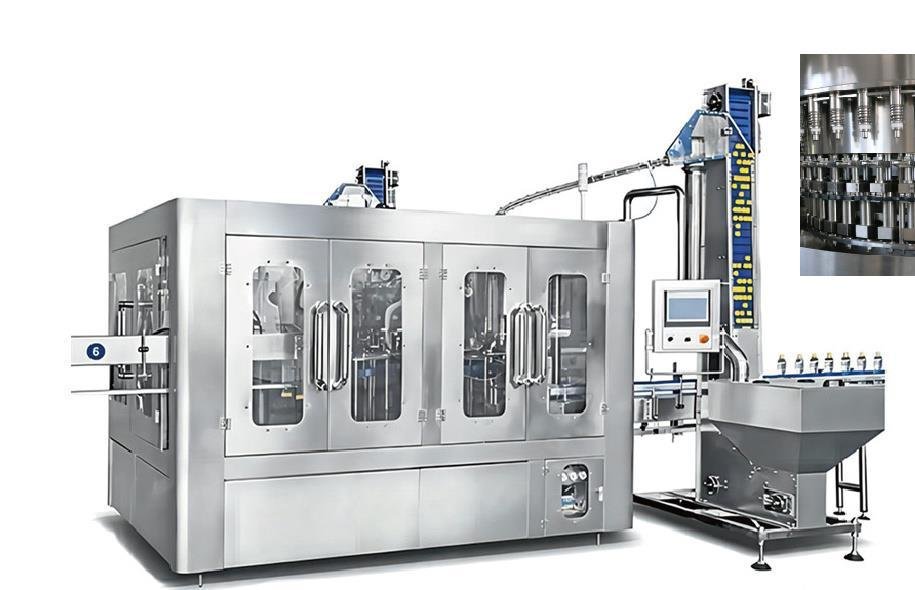
The process illustration supports scope discussion. The XGF equipment image is reproduced from page 9 of the Allot Tech 2026 catalog; use the catalog and project documents to review the applicable configuration.

Buyer questions
Frequently asked questions
Which bottling line documents should be reviewed first?
Begin with the requirement, product and package matrix, process flow, equipment list and responsibility boundaries. Layout, utilities, controls and detailed documents depend on that basis.
Is a supplier drawing automatically approved when no comment is returned?
Only if the contract explicitly defines that process. A safer workflow records submitted, under review, approved, approved with comments, revise and resubmit, or information-only status.
What should a document comment include?
Cite the document and revision, location, affected requirement or interface, requested clarification, priority, owner and whether the issue blocks the current gate.
What belongs in the final digital handover?
The contracted list may include as-built drawings, manuals, component data, serial records, software and HMI backups, parameter sets, passwords under controlled custody, FAT/SAT records, spares and training material.
Project discussion
Review Bottling Line Documents
Send the current document register or file list, equipment scope, approaching approval gate and the technical interfaces that remain unresolved.