
Lifecycle cost planning
Bottling Line Total Cost of Ownership
Compare complete-line proposals through the costs and operating assumptions that continue after the purchase order, not only the quoted equipment total.
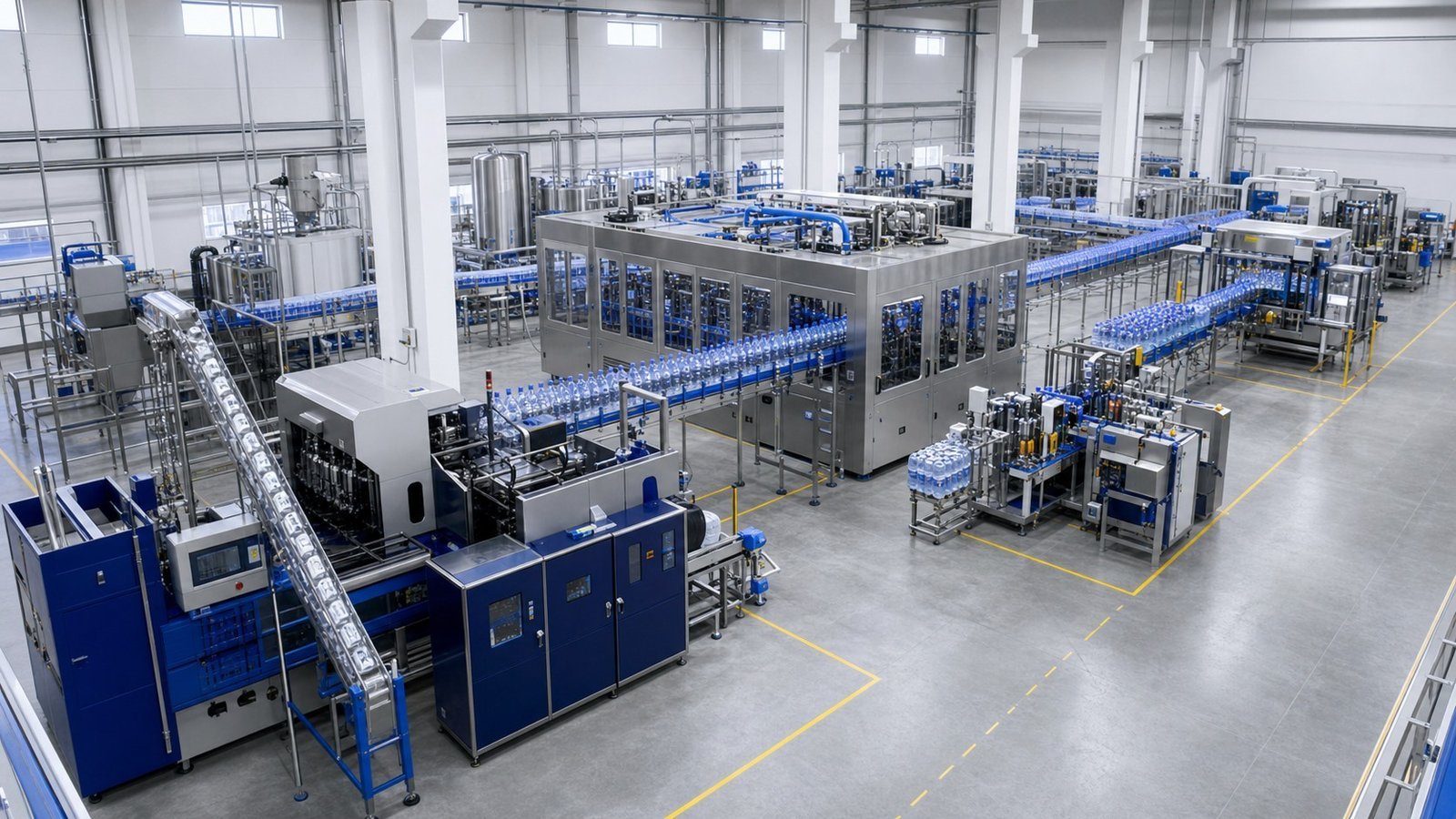
Published by Allot Tech. Project contact: founder Mr Kcal. Final engineering, performance, materials, compliance, manufacturing responsibility and commercial terms must be confirmed for the selected resource and signed project scope.
Updated September 14, 2026Direct answer
A useful TCO comparison makes every supplier use the same operating boundary.
Bottling line total cost of ownership is the buyer-specific cost of acquiring, installing, operating, maintaining and changing the line over a defined evaluation period. Start with the same product and package matrix, annual production plan, site, equipment boundary and service assumptions for every proposal. Then compare acquisition scope, site preparation, utilities, labor, product and packaging loss, changeover time, preventive maintenance, critical spares, planned downtime, support logistics and future-format risk. Do not insert generic online prices or efficiencies. Request supplier-specific data, label every estimate and run more than one operating scenario.
Project definition
Start with the complete decision basis.
Two quotations with similar headline output can create very different operating obligations. One may omit compressors, cooling, conveyors, inspection, change parts, installation tools or controls integration. Another may require more labor, compressed air, cleaning time or specialist support. A TCO model should therefore be traceable to the equipment list, line balance, utility schedule, operating plan and maintenance information supplied for the actual project.
Production basis
Products, approved bottle and pack formats, annual volume by format, shifts, operating days and planned changeovers.
Complete scope
Equipment list, options, exclusions, buyer-supplied systems, site work, services, documents and delivery boundary.
Operating data
Utility demand by operating state, staffing concept, material-loss points, cleaning pattern and maintenance tasks.
Evaluation rules
Currency, evaluation period, local tariffs and labor basis, scenarios, discounting method and confidence level for each input.
System or development path
Move from quotation total to a controlled lifecycle comparison.
Freeze the comparison basis
Use one product, package, output, annual plan, site and responsibility matrix for all proposals.
Normalize acquisition scope
Add omitted machines, change parts, utilities, site works, services, freight and commissioning responsibilities.
Model operating demand
Use supplier-specific utility schedules, staffing assumptions, cleaning cycles and production scenarios.
Quantify loss and availability
Record planned stops, changeovers, maintenance, reject points and assumptions instead of hiding them inside one efficiency number.
Add lifecycle support
Include consumables, preventive maintenance, critical spares, response logistics, training and software or controls ownership.
Test scenarios
Compare base, demanding and expansion cases, then show which uncertain inputs change the decision.
Quotation comparison
Require every proposal to expose the inputs that drive lifecycle cost.
| Decision area | Buyer should provide | Proposal should clarify |
|---|---|---|
| Evaluation basis | Annual production plan, formats, shifts, evaluation period and local cost inputs. | Named assumptions, operating states and data sources that can be transferred into the buyer model. |
| Scope completeness | Common responsibility matrix and destination boundary. | Included, optional, excluded and buyer-supplied items with interfaces and service scope. |
| Resource demand | Local electricity, water, air, steam, cooling, labor and waste-cost basis. | Demand schedule by mode, staffing concept, cleaning needs and calculation conditions. |
| Loss and availability | Expected products, packaging, changeover pattern and maintenance philosophy. | Line balance, reject points, planned stops, maintainability and supplier-supported evidence. |
| Support and change | Required response model, spare-parts policy and future formats. | Consumables, critical spares, support boundaries, backups, upgrade constraints and change-part scope. |
Buyer working matrix
Use this TCO matrix to normalize supplier proposals.
Populate one row at a time with supplier-specific evidence. Keep unknowns visible and run scenarios instead of replacing missing data with false precision.
| Cost driver | Evidence to request | Model treatment | Decision use |
|---|---|---|---|
| Acquisition boundary | Equipment list, services, options, exclusions and responsibility matrix | Normalize to the same delivered and installed boundary | Prevents a narrower quotation from appearing cheaper |
| Site preparation | Loads, access, foundations, drainage, utility connection points and local works | Price through qualified local estimates | Shows buyer-side work before installation |
| Utilities | Demand by running, idle, cleaning and peak states | Apply local tariffs and planned operating hours | Tests sensitivity to air, power, water, steam and cooling |
| Labor and changeovers | Staffing concept, format matrix, task sequence and change-part list | Model normal production and planned format mix | Compares automation with real operating work |
| Product and package loss | Overfill basis, rejects, startup loss, cleaning loss and inspection logic | Use buyer material values and scenario ranges | Makes yield visible without inventing supplier performance |
| Maintenance and spares | Task list, intervals, consumables, critical spares and specialist needs | Separate planned parts, labor and emergency exposure | Tests serviceability and inventory policy |
| Downtime exposure | Line balance, buffers, failure response and recovery constraints | Use scenario-based hours, not an unsupported promise | Shows which bottleneck or dependency matters most |
| Expansion and obsolescence | Format limits, controls ownership, software backups and upgrade path | Record likely change cost and stranded-equipment risk | Protects future products and capacity choices |
Solve the next project problem
Close these proposal gaps before price becomes the decision.
Use the brief below to turn a vague supplier conversation into questions that can be answered and documented.
Make this decision comparable.
Send: Annual production plan, formats, shifts, evaluation period and local cost inputs.
Require: Named assumptions, operating states and data sources that can be transferred into the buyer model.
Make this decision comparable.
Send: Common responsibility matrix and destination boundary.
Require: Included, optional, excluded and buyer-supplied items with interfaces and service scope.
Make this decision comparable.
Send: Local electricity, water, air, steam, cooling, labor and waste-cost basis.
Require: Demand schedule by mode, staffing concept, cleaning needs and calculation conditions.
Send the compared equipment lists, product and package matrix, annual operating plan, utility schedules, destination and the TCO assumptions that remain open. The Allot Tech Project Desk can help organize the first comparison.
Decision evidence
Keep project evidence connected to each approval and release decision.
Evidence should be identified before the order or approval stage so both sides know what will support the next decision.
Approved engineering basis
Keep the signed specification, equipment list, package files, layout and interface responsibilities under revision control.
Manufacturing progress record
Identify agreed drawings, component confirmations, photographs, open questions and approval decisions by date.
Test and acceptance record
State configuration, materials, operating conditions, measurements, results, punch-list items and release status.
Delivery and handover package
Connect packing, serial numbers, manuals, backups, spare parts, training and support contacts to the delivered scope.
Separate facts, estimates and decisions
A TCO sheet becomes misleading when supplier data, buyer tariffs and management assumptions look equally certain. Give every input an owner, source, date, unit and confidence level. Keep commercial currency conversion separate from technical consumption.
- Mark supplier-confirmed inputs
- Identify buyer and local-contractor estimates
- Record unresolved values as open items
Compare scenarios, not one forecast
Annual volume, product mix, shift pattern, energy cost and maintenance strategy can change. A base case alone may reward false precision. Add a demanding case and a future-format case, then review which assumptions reverse the preferred option.
- Use the same scenarios for all suppliers
- Show sensitivity to the largest cost drivers
- Do not treat a scenario as a guaranteed outcome
Connect TCO to the signed scope
The model is a decision aid, not a substitute for the technical agreement. Critical scope, performance conditions, documents, spare parts, support and acceptance obligations still need to appear in the signed project documents.
- Trace model rows to proposal revisions
- Keep exclusions and buyer work visible
- Update the model only when the underlying evidence changes
Decision gates
Move forward when the next commitment has enough written evidence.
Project stages overlap, but each commercial commitment should have a visible basis, named approvers and a list of unresolved items.
Engineering basis approved
The product, package, output, equipment boundary, layout, utilities, responsibilities and open assumptions are controlled.
Manufacturing and test basis approved
Drawings, component schedule, test materials, acceptance conditions, documents and planned evidence are agreed.
Delivery and handover released
Punch-list closure, packing, shipment files, site readiness, installation scope, training and support ownership are visible.
Before requesting a proposal
Build one brief that every resource can answer on the same basis.
This page is designed to help an international buyer prepare a clearer discussion, not to replace the responsible resource’s engineering or the buyer’s professional review.
Product
Beverage, process, hygiene, shelf-life and operating conditions.
Package
Container, closure, label, code, finished pack and approved files.
Output
Required rate for a named format, shifts, annual plan and changeovers.
Factory
Measured space, utilities, access, drainage and local site constraints.
Project scope
Equipment boundary, documents, FAT, delivery, startup and destination.
Allot Tech organized recurring buyer questions, project-scoping patterns, available catalog inputs and specialist-resource context into a decision sequence. No customer case, certification, output guarantee or factory ownership is implied unless separately verified for the named project.
Reference basis
Primary and specialist sources used to frame the buyer questions.
These sources support definitions and planning context. The current edition, local requirements and project-specific acceptance criteria still need confirmation by the responsible parties.
- ISO 55000:2024 – Asset management vocabulary, overview and principles
Frames lifecycle value, asset-management decisions and the need to connect performance, risk and expenditure.
- ISA-105 series – FAT, SAT and integration-test structure
Supports structured acceptance, punch-list ownership and testing from supplier site to installed system.
Manufacturing context
Use equipment views to ask more specific project questions.
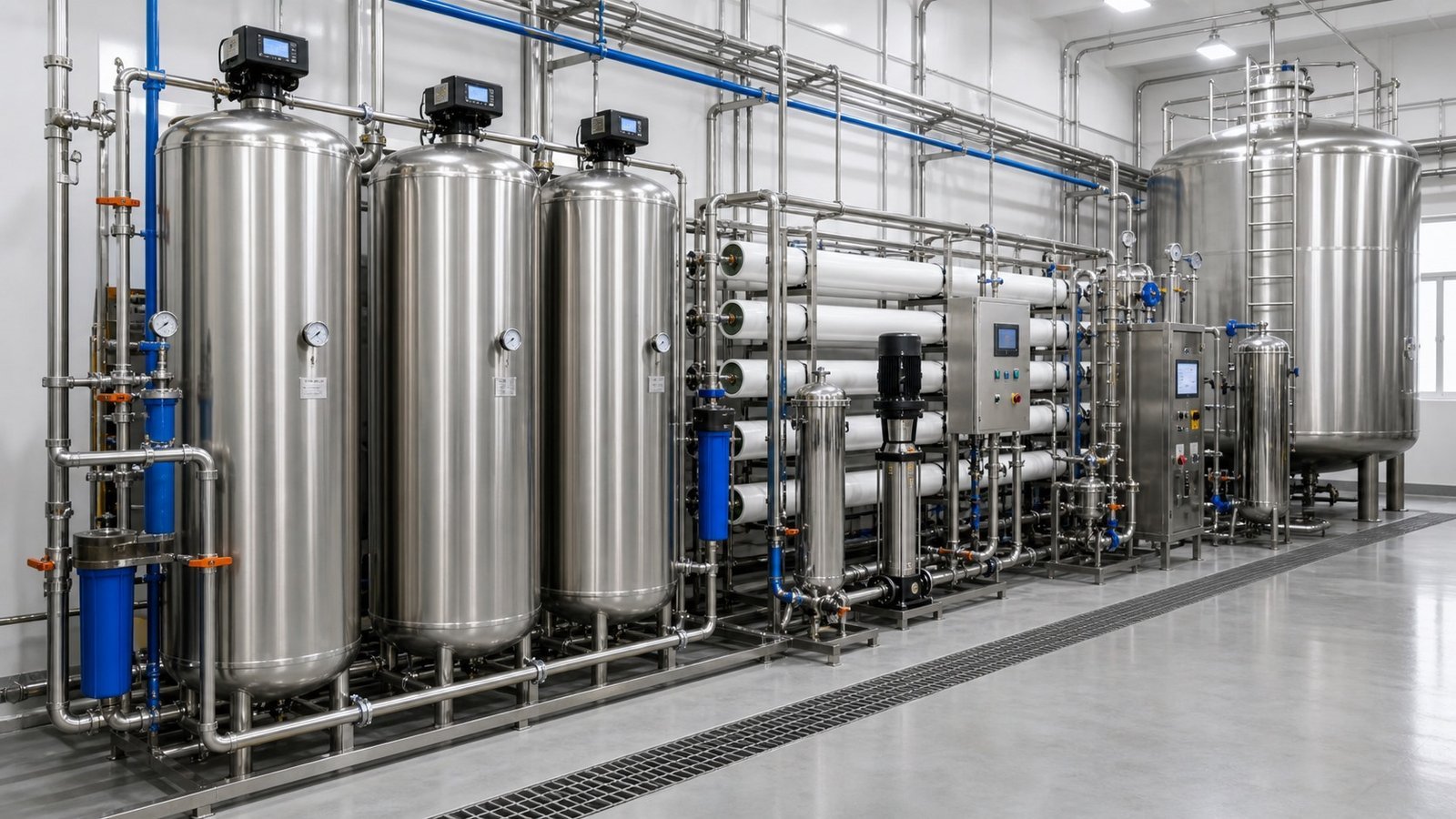
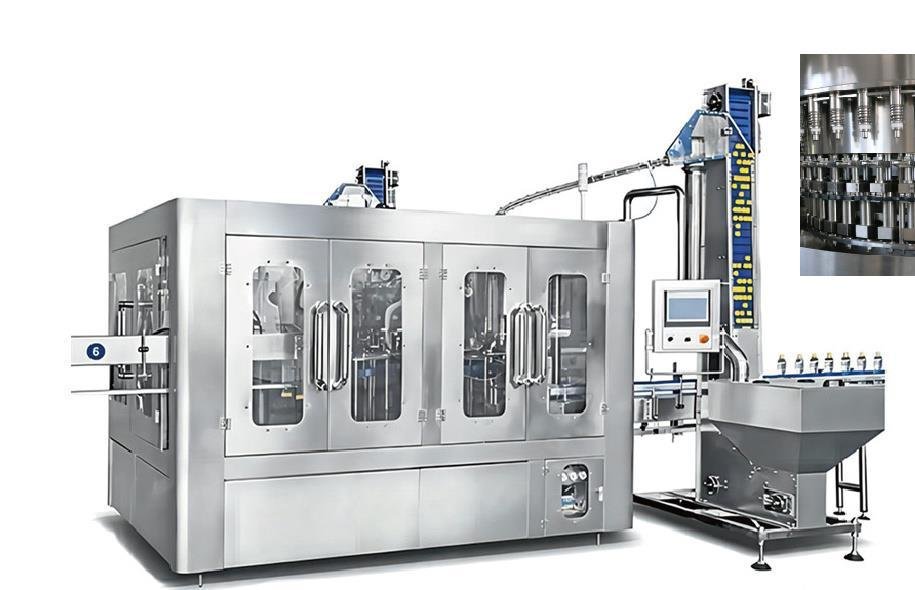
The process illustration supports scope discussion. The XGF equipment image is reproduced from page 9 of the Allot Tech 2026 catalog; use the catalog and project documents to review the applicable configuration.
Buyer questions
Frequently asked questions
Is the lowest bottling line quotation usually the lowest-cost option?
Not necessarily. Different equipment boundaries, site work, utility demand, staffing, changeovers, loss, maintenance and support obligations can outweigh the headline difference. Normalize scope before comparing.
What period should a bottling line TCO model use?
Use a period that matches the buyer investment decision and data quality. State it clearly and test alternate assumptions rather than presenting one period as universally correct.
Can a supplier provide the complete TCO?
A supplier can provide equipment-specific scope, utility, maintenance and service inputs. The buyer must add local tariffs, labor, production, financing, site work, material values and risk assumptions.
Should expected efficiency be included?
Yes, but only with a defined product, format, complete-line boundary, planned stops, test basis and evidence source. Scenario analysis is safer than an unsupported universal efficiency percentage.
Project discussion
Compare Bottling Line Lifecycle Costs
Send the compared equipment lists, product and package matrix, annual operating plan, utility schedules, destination and the TCO assumptions that remain open.