
Carbonated beverage systems
Carbonated Drink Filling Lines from China
Build the CSD line around beverage formulation, CO2 target, container, fill conditions, pressure control, temperature and finished-pack requirements.
Published by Allot Tech. Project contact: founder Mr Kcal. Final engineering, performance, materials, compliance, manufacturing responsibility and commercial terms must be confirmed for the selected resource and signed project scope.
Updated September 22, 2026Direct answer
Carbonation performance depends on the complete cold process and pressure boundary.
A carbonated soft drink line connects treated water, syrup preparation, blending, chilling, carbonation, isobaric filling, closure, warming or drying, labeling and packing. Stable output requires the product temperature, carbon dioxide level, pressure transitions, container and closure to be considered together rather than treating the filler as an isolated machine.
Source catalog models
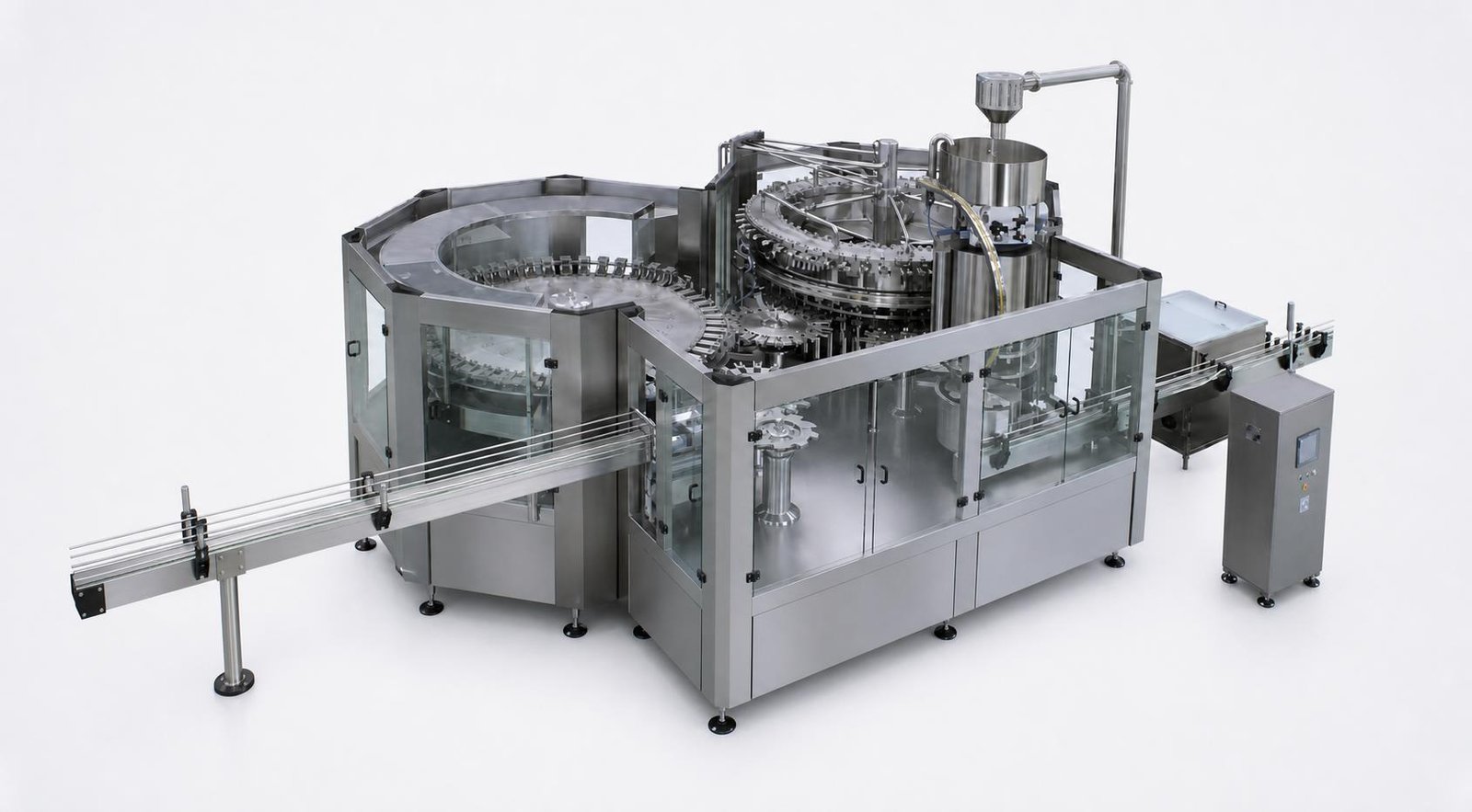
DXGF filling-machine models at a 500 ml reference size.
These four examples come from the eight-model table on page 12 of the Allot Tech 2026 catalog. The stated container range is 500–2,000 ml, height 170–320 mm and diameter 50–115 mm. Confirm the bottle drawing, neck finish, closure and change parts for every format.
| Reference model | Catalog BPH at 500 ml | Machine L × W × H (mm) | Weight (kg) | Listed power (kW) |
|---|---|---|---|---|
| DXGF14-12-5 | 4,000 | 2,360 × 1,770 × 2,700 | 2,800 | 2.42 |
| DXGF24-24-8 | 8,000 | 2,800 × 2,230 × 2,700 | 4,800 | 3.92 |
| DXGF50-50-12 | 18,000 | 5,900 × 4,123 × 2,700 | 8,600 | 7.87 |
| DXGF72-72-18 | 28,000 | 6,540 × 4,900 × 2,700 | 12,800 | 11.40 |
Keep the rating conditions in the quotation. Catalog BPH is a reference, not a guaranteed good-pack rate for every recipe or bottle. Machine dimensions exclude conveyors, service access and the full line layout; listed power excludes the total plant utility load.
For carbonated beverages, specify the carbonation target and measurement basis, product temperature, package pressure requirement and closure. Confirm chilling, carbonation and pressure-control scope together with the filler.
Editable buyer checklist
Send the same equipment brief to every proposed resource.
Download an editable RFQ checklist for beverage, bottle and cap, output, process scope, site utilities, acceptance and commercial boundaries. The plain-text file opens in a text editor and can be copied into your own project documents.
Project definition
Start with the complete decision basis.
A carbonated soft drink line connects treated water, syrup preparation, blending, chilling, carbonation, isobaric filling, closure, warming or drying, labeling and packing. Stable output requires the product temperature, carbon dioxide level, pressure transitions, container and closure to be considered together rather than treating the filler as an isolated machine.
Product
Soft drink, soda, sparkling water or other carbonated beverage; Brix, CO2 target and recipe basis.
Container
PET, glass or can; dimensions, pressure performance, closure, label and finished pack.
Process
Syrup preparation, blending, deaeration, chilling, carbonation, CIP and product transfer.
Output
Target BPH or CPH, reference size, format mix, ambient conditions and factory utilities.
System or development path
Control product preparation, carbonation and filling as one pressure system.
Treated water and syrup
Define water quality, sugar or sweetener handling, syrup room, filtration and batch records.
Blending and deaeration
Control product ratio and dissolved oxygen before carbonation according to the approved process.
Chilling and carbonation
Match temperature, pressure, CO2 dosing and buffer conditions to the product requirement.
Isobaric filling and closure
Confirm container type, filling level, foaming control, cap or seam quality and pressure-release sequence.
Warming, drying and inspection
Protect bottle or can stability, remove condensation and prepare the package for labeling or coding.
Packing and pallet flow
Match pack pattern, conveyor accumulation, palletizing and warehouse handover to actual line output.
Quotation comparison
Compare CSD proposals using defined process and package conditions.
| Decision area | Buyer should provide | Proposal should clarify |
|---|---|---|
| Carbonation basis | Target CO2, product temperature and ambient range. | Mixer or carbonator design, control basis, stated accuracy and test method. |
| Container pressure | Approved PET, glass or can specification and closure. | Handling, filling, capping or seaming, inspection and pressure-safety assumptions. |
| Product route | Water, syrup, ingredients and cleaning requirements. | Blending, tanks, piping, CIP boundaries and instrumentation. |
| Line output | Reference size, pack format and operating schedule. | Balanced output through filler, warmer, labeler, packer and palletizer. |
| FAT | Test liquid, CO2, containers, closures and measuring method. | Run conditions, records, acceptable variation and unresolved-action process. |
Quotation scope
Compare carbonation, cooling and filling as one operating scope.
A filler-only quotation and a carbonated beverage line quotation describe different purchases. Name each supplied module and its interfaces before using the price for a budget decision.
| Scope decision | Buyer input | Ask the quotation to state |
|---|---|---|
| Product and carbonation | State the beverage, carbonation target with units, and agreed measurement point. | Identify syrup preparation, mixing, carbonation, CO₂ supply interface and product transfer responsibility. |
| Temperature control | Provide the required operating temperatures and available cooling-water conditions. | List the chiller or other cooling scope, connection loads and responsibility for temperature at the filler inlet. |
| Bottle and closure | Send pressure-suitable bottle/closure specifications and all planned formats. | Confirm handling, filling valves, capping configuration and change parts against those drawings. |
| Acceptance run | Name the test beverage, bottle format, rate and measurement procedure. | Agree checks for fill, closure, carbonation and package appearance, plus the conditions for recording good output. |
Decision evidence
Keep project evidence connected to each approval and release decision.
Evidence should be identified before the order or approval stage so both sides know what will support the next decision.
Approved engineering basis
Keep the signed specification, equipment list, package files, layout and interface responsibilities under revision control.
Manufacturing progress record
Identify agreed drawings, component confirmations, photographs, open questions and approval decisions by date.
Test and acceptance record
State configuration, materials, operating conditions, measurements, results, punch-list items and release status.
Delivery and handover package
Connect packing, serial numbers, manuals, backups, spare parts, training and support contacts to the delivered scope.
Temperature is part of the filling design
CO2 retention and foaming behavior change with product temperature and pressure. Quotation assumptions should state the design temperature and the responsibility for cooling water, refrigeration and operating conditions.
- State inlet and filling temperature
- Confirm chiller and utility boundary
- Record ambient design conditions
PET, glass and cans are different projects
Each container uses different handling, closure and inspection logic. A proposal should identify format-specific equipment, change parts and safety measures instead of describing all packages as interchangeable.
- Approve every package drawing
- Check closure or seam inspection
- Compare format-change requirements
Measure acceptance, do not rely on appearance
FAT should use agreed measuring methods for output, fill level or volume, closure quality, product temperature and carbonation where the test setup permits. Final beverage quality remains subject to the responsible process and quality parties.
- Define instruments and sampling
- Record stabilized running conditions
- List post-FAT open actions
Prepare your inquiry
Request a carbonated-line quotation
Send the beverage specification, carbonation target and units, intended operating temperature, bottle and cap drawings, required output, cooling utilities and installation country.
The form carries this product reference into an editable inquiry. Add your requirements and contact details before sending.
Buyer questions
Frequently asked questions
What equipment is used in a carbonated drink filling line?
A complete line may include treated-water and syrup systems, blending, deaeration, chilling, carbonation, isobaric filling, capping or seaming, warming, drying, labeling, packing and palletizing.
Why is product temperature important?
Lower and controlled temperature supports CO2 retention and affects foaming, filling stability, utility demand and the carbonation process.
Can one project include PET bottles and cans?
It can be discussed, but PET and cans normally require different filling, closure and handling equipment. Shared upstream process scope and separate packaging lines must be defined clearly.
What should a CSD RFQ include?
Include recipe basis, Brix and CO2 target, package drawings, target output, process scope, utility conditions, factory layout, destination and acceptance requirements.
Project discussion
Discuss a Carbonated Drink Line
Send the beverage, package files, required output, factory conditions, destination and current project stage.